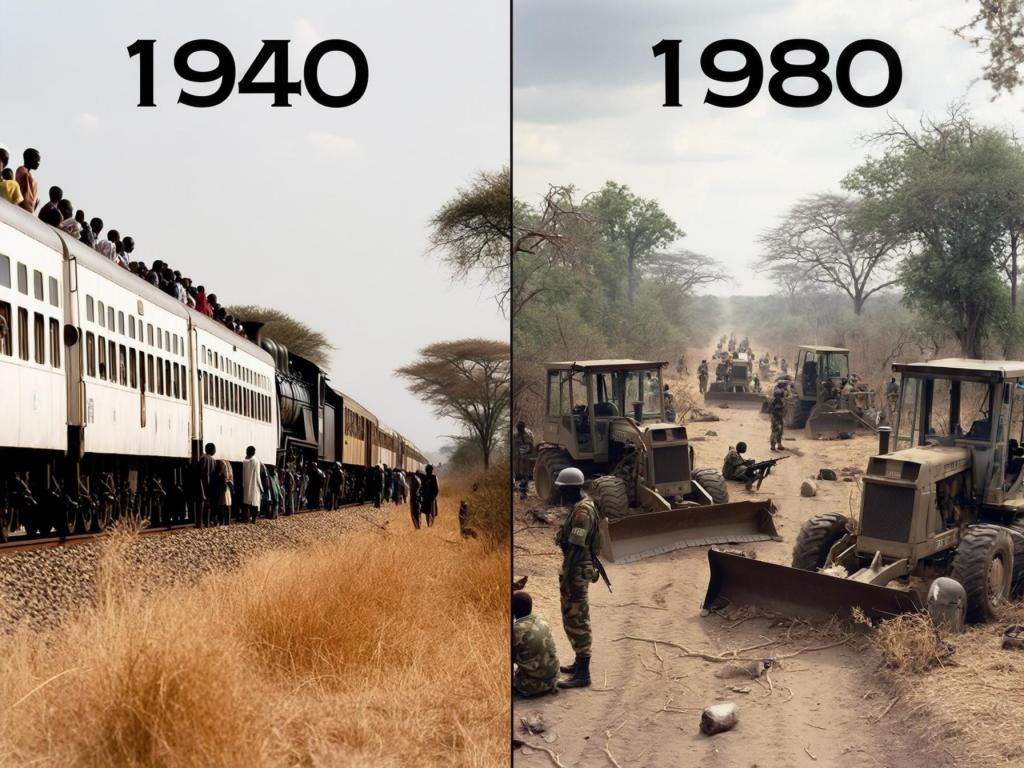
A Blunt Tale of Hype, History, and a Colonial Trainwreck
In 2024, a 75-year-old South African became Africa’s No. 1 shot-putter in his age group. No Biden White House fanfare. The effort’s cute, but the world champ throws a ball twice as heavy twice as far. Since time began, results win. Unofficially? He’s white, and that’s a strike against him.
Wokeism—yesterday’s ultraliberalism jacked on steroids—changed the rules: merit’s out, skin’s in. Sub-Saharan Africa’s black Africans got a free pass, no questions asked. The need to dole out handouts while ignoring performance is counter-humanitarian. Africa’s racing toward 4 billion people by 2100—a tidal wave that could capsize the global boat. This isn’t new; Europe tried to help, got kicked out, and now the clock’s ticking. Let’s look behind the Left’s Band-Aid.
Late 1950s: colonial flags fell, and the West’s emotionalists—economists, liberals, Christians, communists—toasted an African renaissance. Charity balls glowed with fantasies of unleashed potential freed from white restriction. Africa’s dimly lit streets roared.
The masses, wired to ditch tribal collectivism for ownership, bought the hype. Graffiti covered colonial buildings, bridges, roads: “We’re in charge now!” “We’ll be rich!” They inherited European systems tweaked for Africa’s heat—a massive Santa Claus sack of thousands of gifts that would take decades to wear out. New elites spun dazzling visions of wealth, exciting crowds who’d never glimpsed the statehouse engine rooms. Local realists—white Africans who’d watched the dirt run through their fingers—warned: this dream will sting worse than a hangover.
Pre-colonial Africa was Stone Age with zero urgency to evolve. There were exceptions: Mali’s Sankore scholars and Djenné’s mosque impressed, Nigerian empires rose and fell, Great Zimbabwe served little practical purpose but excites conversation. It was brilliance in a vacuum, millennia behind Eurasia. Tools stagnated, huts stayed basic, gods never modernized. Agriculture barely existed—sorghum patches and cattle for status, not food. Birth rates were low, survival rates lower, life brutal. Tribes were flat hierarchies unless you ruled; women bred and worked. Raids were the economy; “Us vs. Them” was law.
By 1000 BC, Eurasia had lapped Africa—China’s terracotta roofs beside rice fields versus savannah thatch. First contact came with Arabs trading trinkets for slaves and ivory, with some Berber interaction. Portuguese built pitstops for their Asia ventures, introducing never-before-seen crops. Africa’s best minds, now chained, sailed to the Americas while the comfort trap, a culture of “enough,” chained intellectual progress for those who remained. By the 1800s, Europe was galaxies ahead—think iPhones versus smoke signals.
The first white Africans upset order by plugging the vast gaps between tribes, curtailing raids, and sparking trade. Then, from 1900, Europe began laying millennia of know-how into Africa’s 100 million people.
Colonialism released a thousand choices where there had been none. Suddenly, life beyond the tribe! How does it feel to escape a hundred-thousand-year-old cell? Most clung to the past, hiding in tribal tradition, others tested the water, but the sharp ones grabbed the wheel. With them, was the future.
Sub-Saharans got towns, railroads, ports, clinics, and schools—not charity, but profit-driven systems with rules and electricity. Call it “exploitation” if you’re woke, but it was economics 101. Jobs, training, merit-based advancement into taking on the responsibility of encouraging unequalness—firsts in African history.
With exceptions, colonizers wore kid gloves compared to the brutal sagas of the Americas, Asia, and Australasia. They offered pay for work with a handshake. In the homelands, colonists advised tribal chiefs on clearing bush for business hubs and farmland management. When locals requested permanent water, roads, clinics, and schools, colonizers delivered—imperfectly, but they did. The win-win showed in surging population, school enrollment, and graduates hitting record highs. All in just 50 years, despite World War I, the Great Depression, and World War II.
Don’t mistake the velvet glove for kindness. In return, resources flowed out, power mostly stayed foreign, and the competent were well rewarded from the start.
Post-WWII, the music stopped. Roosevelt’s America axed colonialism—the US dollar became king, globalization queen, trade the messiah, backed by America’s IMF, World Bank, USAID, and multinationals that dwarfed Africa’s economies. Africa’s new elite, their fathers recently freed from tribal chains, themselves armed with Western arts degrees, shouted “equal footing!” The baton spun uselessly among poets, preachers and PhDs, not builders—the relay race to improvement was abandoned. Africa needed farmers, mechanics, researchers, traders—not Marxist orators with flawless accents. Broke colonial powers, bowing to the U.S., handed over anyway—free, no strings.
Cracks appeared fast. Ghana’s currency tanked 14% against the dollar by the late ’60s. A Nigerian’s grocery basket jumped 45% in a decade. The colonial seed never sprouted; no matter how hard enthusiasts clapped, it couldn’t. Globalists smirked—they’d never hire these executives back home. The harsh truth is, Sub-Saharan Africa faces an IQ challenge.
An average IQ of 70 fits the magnificent adult physique for hunting, raiding, football, and child-rearing and handcraft, but struggles with building modern competitive economies. Solving complex problems boosts IQ, but Africa dodged that homework and now desperately needs guides to bridge the skill gap. Colonialism left tools; independence left few teachers.
The paradox: while the woke deny Africa’s capability ceiling, the elected elite understand it. They pursued an updated tribal collectivism path—cronyism and corruption exploded. Population soared—100 million in 1900 became 228 million in 1950, 383 million by 1980. Health services cratered, incomes imploded, violence spiked, and jobs disappeared. The desperate brought traditional skills to cities; squatting spread alongside failing sewage systems and garbage mountains. National debts became unrepayable, with only enough resources for shaming welfare.
The brightest took degrees from formerly white universities to places where opportunity matched reward. Every year the talent pool shrinks. No one wants to work for an incompetent boss, even if politically connected.
Africa’s stall affects us all.
Humanity evolved: first we looked after our own, then stopped killing and invented slavery. Colonialism was the next step—it transformed Eurasia. Now we’re on a countdown to 2100, when Sub-Saharan Africa will host 90% of the world’s poor. Get help to put the shot 23 meters or step out of the circle.




 Douglas Schorr
Leave a comment