
“Spontaneous” protests—follow their money, follow their emotions.
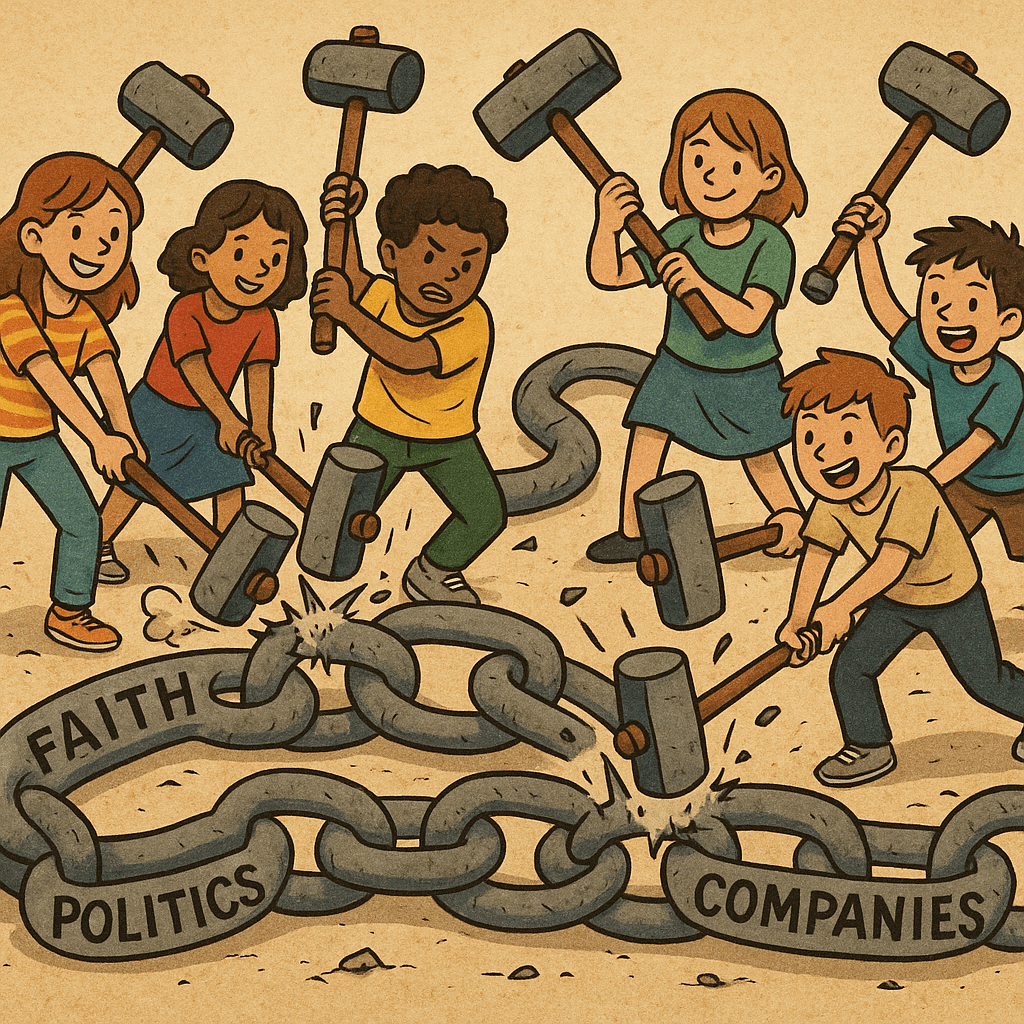
Folly by folly, let’s punch the lights out of some of today’s highly lucrative protest jobs—and the activists who spin emotions into “movements.”
If you’ve ever looked at a protest that seems spontaneous but suspiciously well-organized (banners, bullhorns, even brutally well-armed “shock troops” ready to roll), you’re not imagining things. There’s big planning, invariably big damage. Who’s at it? Mostly big money—more often than not when it’s not some government’s taxpayers contributing, it’s a political party’s under-the-table donors. It’s their wishes that slosh about the minds of those filling the streets, making out that they’re there to change the world.
The irony is whatever happens, GDP soars as the scramble begins to clean the mess once the satisfied egos have retired to their living rooms and the “engaged” to their board and operational rooms, respectively.
The Tricks Activists Play
For the backroom planners it’s a pick-a-cause routine. Make it emotionally appealing, headline-grabbing, capable of inducing even the intellectually capable stupidly to throw themselves in.
Selective climate, racism, gender, animal rights, human rights issues—always selective. If you have a calamity on your doorstep, ignore it and support the “complaint” “over there.” On the surface it genuinely does sound “good for everyone.” Yet though their solutions are never practical, it takes years, sometimes decades, to prove the activists wrong. When history suggests it’s been done before, they say, “This time is different,” but reality rolls on regardless.
Organization Hides Behind ‘Spontaneity’
No protest is truly “organic” when expensive gear, banners, and (certainly the seeders) paid demonstrators materialize overnight. Hong Kong, Libya, Myanmar, LA—always someone pulling strings, scripting outrage, maximizing collateral damage. Too many join these movements based purely on emotion and the call of the paid seeders, forfeiting their duty of free-thinking.
The simple blocking of streets for prayers is an assumption of rights one doesn’t have at the expense of others. It is an “up yours” signal, a mark of disrespect at a time when the world desperately needs the productivity of a well-oiled, constructive economy.
Damn it. I’m 76, why do I worry? Because my generation did our “bit,” and these uncritical followers are being encouraged by false prophets to take it down. It is, dear reader, actually your call but here are a few points to see what gets ignored for the sake of noise…
Armageddon
…features universally in scripture because it must happen. The Moon’s origin is cosmic poetry—born of collision between us and the fiery “female,” Theia. Ironically, we thrived after the dinosaurs were wiped out but only because we mostly lived underground then and ate bugs and others’ leftovers. But there’s another coming. And we’re replaceable. The universe counts years by the billions, our earth in hundreds of millions. We need colonies far away—now! We need to learn—spend the dollars and Yuan to act on that learning.
Climate Crisis?
No crisis. Unstoppable change by the order of the universe—yes.
Mars is now a desert. In earlier times it once rained on earth for a million years. Since, our speck in space has cycled between ice and green. The North Pole was once lush—camels’ ancestors played there. Climate change is old news; our productive activity might even temporarily fend off the obvious trend of global cooling. Cold kills.
CO₂: The Real Gas of Life
Net zero is grave talk.
The Plant Kingdom needs carbon dioxide. Plants make the “free” oxygen the Animal Kingdom needs. It is a cycle of release and sequester. Warmth breeds life. Little life on Earth has the biology to counter what’s coming. Fossil fuels enabled the modern age; every comfort you own owes something to oil and gas, not just the solar and wind apparatus that activists praise but rarely rely on for real living.
Too Many People?
After a 4-fold increase in 70 years, the overpopulation concern is loud. But zoom out to species survival and it’s concerning for different reasons.
Eurasia’s problem-solving populations (and that productive U.S. slice) are depopulating fast, fertility at 1.5 children and falling, their productivity engines sputtering without heirs. Meanwhile, populations with limited productivity capacity balloon. Sub-Saharan Africa corners 30% of global population by 2100, a 3-billion-strong youth wave. Layer in South Asia’s segment (India/Pakistan/Bangladesh/Afghanistan), where the capable emigrate as fast as they can. By 2100, the competent counterweight (Europe/North America/East Asia) shrinks to roughly 25%, with well over 50% requiring support from that diminishing base.
Animal Welfare Follows the Theme
Westerners complained about animal abusers by opening their wallets to build shelters. All that does is magnify the problem.
Want to help? Don’t sympathize with the animals and laud the Donkey and Dog home. Insist the police act. Seeing a family spend 6 months mucking out a cattery at their own expense will soon put a stop to pets littering the roadside.
But more importantly, straighten out your values! Let a person off for running a red light and he’ll think the building laws are fair game next and after that, what about squatting rights to your back bedroom?
Discrimination and Meritocracy
Most “racism” stories amount to healthy discrimination—made contentious by governments seeking to deflect attention from their own malpractices. Discrimination is survival instinct as old as life itself. In truth, competence, not color, and species survival objectives (produce, parent, protect and provide for) move the world. And for that we should reward accordingly.
It’s time for straight talking. A white guy with straight blonde hair and a big nose fleeing a crime scene is a white guy with straight blonde hair and a big nose—descriptive accuracy isn’t discrimination.
Minimum Wage and Hierarchies
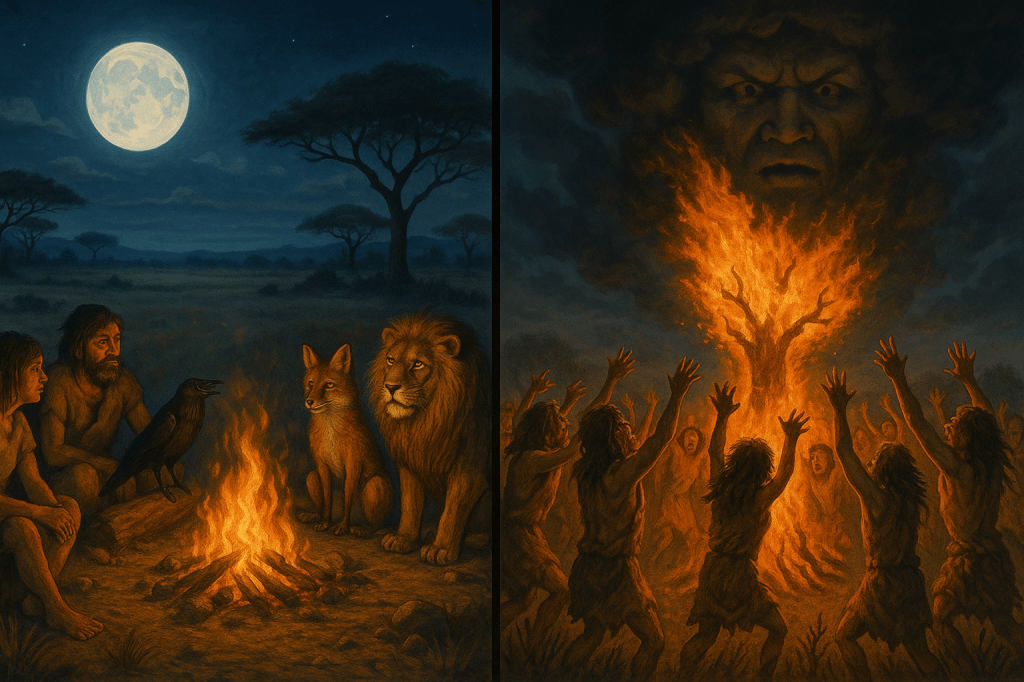
From our earliest days, superior performance won a place at the fire closer to the food or the warmth of potential partners. No one said, “Take the learners on the hunt and when they fail we never eat again, no worries.” Entry-level positions exist for learning. That’s the origin of appropriate entry wages.
Arbitrarily raising minimums locks out learners and for the semi-skilled accelerates automation. Let the market decide. Exploitative employers don’t last long once word spreads.
Hierarchies are real. Everyone answers to someone, whether at work or at home.
Crime and Accountability
We’ve been convinced that “bad guys” have good reason for behaving badly—us! The more successful society is, the greater it presumes its guilt.
There is fundamentally one crime—theft—whether of goods, innocence, lives or nature’s order. Justice has the duty to purposefully punish detraction, repair harm, and protect the honest.
Diet Reality
Humans aren’t designed for grass. We’re hypercarnivores—a forced plant-based diet is backed by economic ideology, not biology. The result: 8 billion humans are in metabolic decline not from climate scenarios painted hourly, but from the simplest daily choice: what we eat.
In unprecedented folly, we’ve abandoned the diet that defined us over millions of years, replacing it with fuel our bodies can’t process. This march to monetary wealth at health’s expense is led by our own experts—thanks to ideology and compliant followers.
The Real Stuff Gets Ignored
While activists chase drama, crucial issues fester. Noise drowns out the needs for genuine health, lifelong skill-building, solid families, and resilient communities. Building space infrastructure gets dismissed.
Slogans and outrage are easy; real change demands competence, honesty, and hard work. And the vision only clear-thinking minds have.
Activism looks busy, feels righteous, and sounds inspiring. But without accountability, evidence, and humility, it’s just more blinding crap.




 Douglas Schorr
Leave a comment