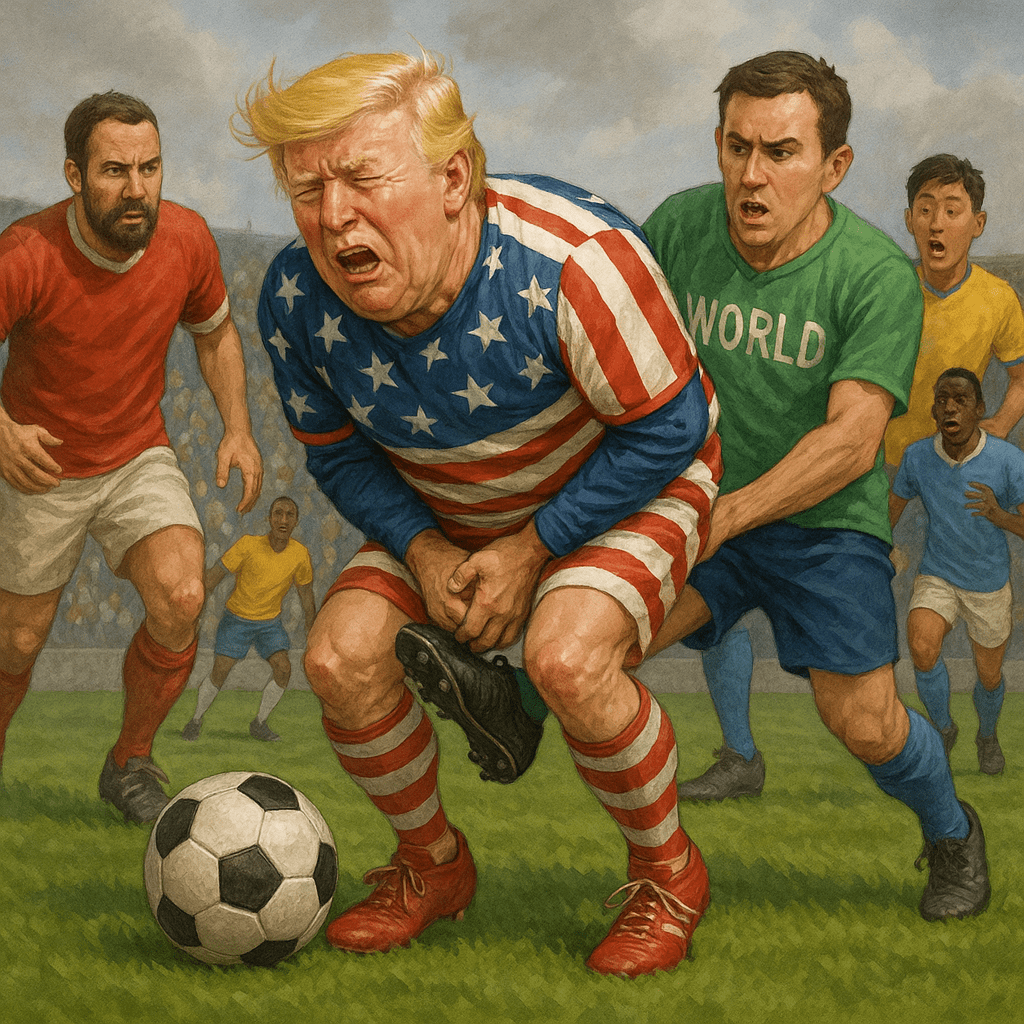
Trump’s tariffs will sucker-punch America. Brace for shortages and world scorn.
Picture a bustling market: you spot a compact, powerful torch, perfect for camping. You haggle with the trader, strike a deal—done. Trust sealed the deal. Simple, right? Humanity has been doing this since we built villages alongside farmers and started producing tools to make their work easier. Buyer meets seller.
Trade’s golden rule: both sides must let the other win.
Toss in Trump’s tariffs, and suddenly it’s a mess. They’re a wrecking ball. Under Trump, trade happens beneath unnecessarily dark clouds of heightened “Us and Them” distrust. Tariffs jack up prices, tank quality, and fleece you—the consumer.
Is Trump clueless? How will this magically make America great again? You’d think a businessman would understand that politics and government have no place in the simple mechanics of producing goods and marketing them. But he isn’t really a businessman. A modern American, through hotels and casinos, he’s a service specialist renting rooms and selling time on casino stools.
Trade is what keeps the world spinning.
From ancient ships crossing seas and camels trudging deserts, it’s about trust—quality, delivery, price—whatever the system: capitalism, socialism, communism, or philanthropy.
Big deals—say, New York importing Shanghai torches—add banks, shipping, insurance, but the core remains unchanged: both sides need enough surplus after expenses (profit) to keep the shop open tomorrow. Tariffs? They’re taxes slapped on imports, gumming up the deal. Your $10 torch becomes $15, or you settle for a dim knockoff to afford it. It’s theft of a fair deal.
Tariffs were originally fees to cover government costs for inspecting imports—that’s a legitimate and necessary government job. Now, they’re a tool of political expediency.
Trump’s dream of revenue for the treasury is nonsense: if it’s not money down the drain, it’s money that never circulates. Both sides are damaged.
Trump’s tariff hits your wallet
He claims higher import taxes fill the treasury, letting him cut taxes. Sounds clever, but it’s a rip-off. A 10% tariff turns your $10 torch into $11; a 50% tariff makes it $15—before marketing and sales costs—hitting your wallet harder than any tax break helps. You think, “I’ll just skip buying!” Wrong—a supply chain is like an 18-wheeler travelling stuck a congested highway, and those costs creep into everything, from phones to fries.
Customs rakes in extra, but how many units will actually move under Trump’s new tariff rules? Aside from NGOs and religious organizations, governments are the biggest non-paying consumers of world resources. How much of that extra raised actually makes it to the Treasury?
More important: what happens to paid-for but unsold stock? What’s the impact on importers, the wider job market, and the economy? Just as government’s cash grab doesn’t rebuild factories, it can ruin employers.
The world fights back
Those who aren’t easily bullied, those not in the UN’s begging bowl club, slapped retaliatory tariffs on everything from cars to coffee. China is the world’s factory—the US of the 1940s and 50s. It immediately hit American tech and agricultural exports. Meanwhile, as Trump throws tantrums, the channels where a $1 part crosses borders five times before your torch is built—get choked.
Worse, tariffs spark trade wars. Fun to read about, but in the fragile “Us and Them” world, these disputes raise tensions. Imagine nuclear war over a disagreement about tariffs, supply, and the price of sanitary towels for America’s trans community. Trade wars aren’t just headlines—they’re a tax on your life.
The mighty—err—mouse dollar trap
A weakening U.S. dollar makes America’s imports even costlier. Sure, exports look cheaper, but as the world outside the US and EU catches up, how much basic stuff does America produce?
Unless Trump backs down, imports will cause more than pricier goods. He’ll waste money created by banks and lenders for countless deals struck in marketplaces worldwide. Whether inflation or deflation, fiat money is screwed.
The net result piles on consumer pain and hits jobs—unless wages rise, buying power shrinks; when wages do rise, more jobs vanish.
The myth of jobs
“Make America Great Again” promises jobs, but it’s a fairy tale. Like the now wealthy enough uncle who swapped greasy overalls for a suit and tie, the US shifted to a service economy—false meat burgers, gyms for the obese, drugs for diabetics, insurance policy swaps, tech, and retailing imports—long ago. Trump bets high tariffs will force companies to manufacture in America, but the US hasn’t made its own baseballs—or basic anything—in decades. Dozens of countries produce specialties better and cheaper. Some of those specialties are just small parts added in five countries before becoming a whole.
Modern supply chains are global; you can’t tax them back to 1800s factories or rebuild on the backs of wars. If steel mills come back, groceries and gadgets just get more expensive. Data backs this up—US tariffs in 2018 raised consumer prices by $40 billion annually, with minimal job gains.
Tariffs don’t revive industries; they rob your choices. Want that Shanghai torch? Too bad—tariffs mean a cheap knockoff or an empty wallet. From Chile to Canada, the Czech Republic to China and Cambodia, buyers and sellers just want a fair deal. Tariffs steal that, rigging the game for bureaucrats, not you.
Trump’s argument that sellers are ripping off Americans implies American buyers are soft in the head—yet America has the highest standard of living in the world, built on trade with the rest of the world.
What we call “profit”—the excess income over production costs—is what funds another day and keeps business going. Both sides want a fair deal. Why settle for less?




 Douglas Schorr
Leave a comment