The misunderstood hormone: when what we eat shapes who we are.
An anguished shout, a cry, parted the people rushing along the pavement. Sipho rushed up to the school fence as the young man was no more. Some stopped—in sympathetic acknowledgment perhaps. One lady declared she’d phone the police, but mostly people hurried on—the day lay ahead. This was just a continuation of yesterday. Has anyone in South Africa not been affected by a violent event? Why? The dead lad didn’t look as though he had enough to murder for. A phone?
Mutterings erupted, “Why! Damn this Zulu warrior testosterone!”
“You know that’s a myth, right?” said a voice at Sipho’s shoulder. Sipho looked blankly at his science teacher. “High testosterone doesn’t make you a wild animal—it’s low testosterone, due to poor nutrition, that’s linked to mood swings and those uncontrolled bursts of aggression.”
Those words sent Sipho journeying into one of SA’s most dangerous misconceptions. He discovered a complex, unsettling truth that challenges both mainstream traditional religious rhetoric and the feelings of the woke.
The myth has a lot going for it: over 28 million receive social grants and there aren’t jobs to supplement the meagre payments. Millions feel robbed of their identity and purpose. The nation has long been haunted by a cycle of brutality. The common explanation for anger and violence has always been high testosterone.
Sipho soon learned science tells a different story. High testosterone is associated with clarity, steady impulse control, and calm confidence. A visit to Wits University’s endocrinology department (the study of the biology of hormones) specializing in men’s health exploded his mind.
“Your teacher is right,” a researcher said. “It is the opposite of what people believe. We see hundreds of young men with symptoms of irritability, mood swings, and impulsive aggression. When we test them, their testosterone levels are often critically low.”
She pulled out a chart showing testosterone levels across different populations and diets. “Men from traditional hunter-gatherer societies maintaining their ancestral diets show testosterone levels nearly double what we see in urban South African men. Do you see the difference?”
Wide-eyed, Sipho replied. “I had maize meal porridge for breakfast, white bread sandwiches for lunch, and dinner will be maize meal too! Chicken? Yeah—on weekends.”
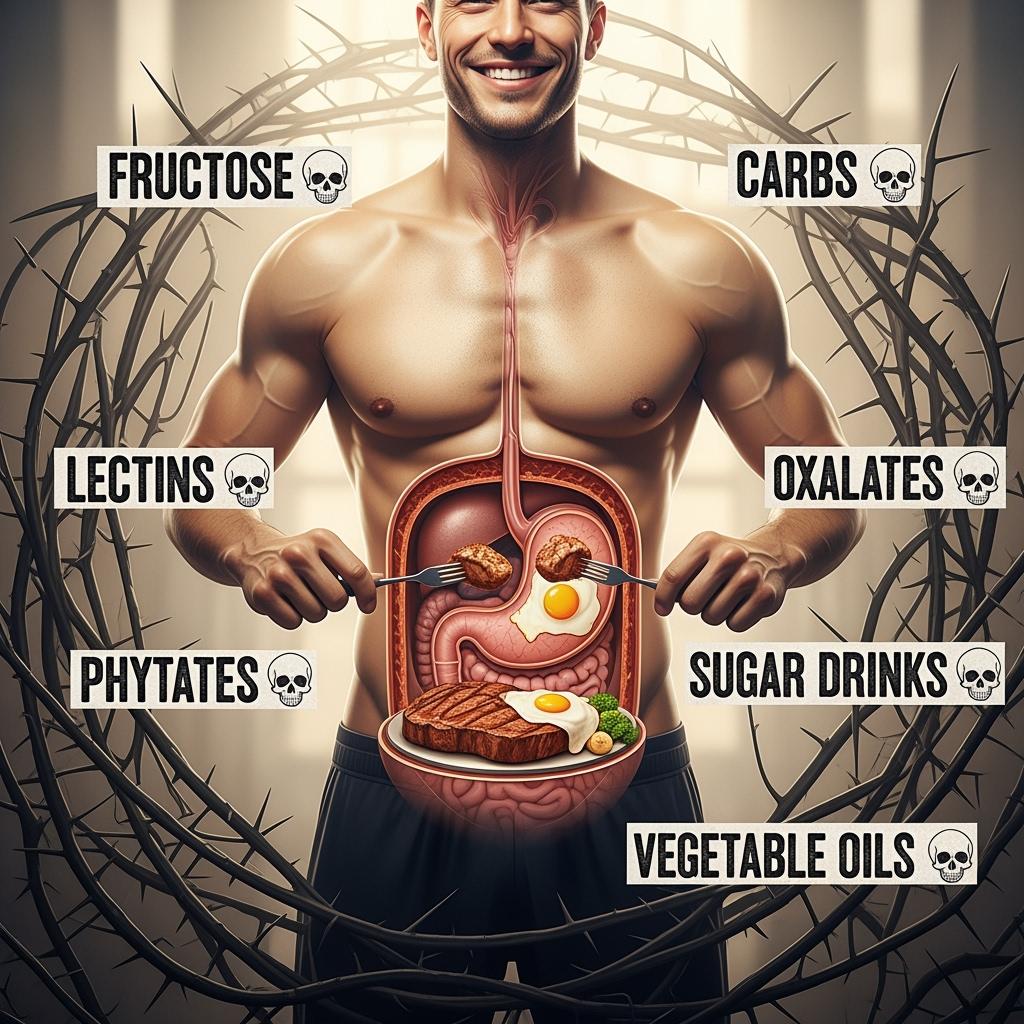
Testosterone requires specific building blocks—cholesterol and saturated fats from animal sources. The ancestral diet included plenty of meat, marrow, and animal fats. Today it is, basically, sugars that provide none of these essential components. It has been that way for generations.
The doctor showed him a chart tracking violence rates against maize consumption across different regions of Africa. “The correlation is unmistakable. Areas with the highest consumption of processed carbohydrates and the lowest consumption of animal fats show the highest rates of interpersonal violence.”
Sipho shook his head. “Goodness, Doctor, aren’t you pleased to be a woman!”
She laughed! “With all our uniquely complicated female equipment, we have more than our share of hormone-induced issues!”
Though naturally at much lower levels—it’s relative—women produce testosterone primarily in the ovaries, adrenal glands, and fat cells. It plays a crucial role in bone health, muscle strength, mood regulation, and libido. If women don’t produce enough, they have all the issues a low-testosterone male has: compromised bone density and strength, a higher risk of osteoporosis, and a reduction in muscle tone and a loss of overall vitality influencing emotional stability and cognitive functioning. On top, a loss of sex drive and fertility.
“Don’t forget the important role of microglia—the brain’s immune cells,” the doctor continued. “When we overload on processed carbohydrates and fruit and seed oils, microglia become inflamed. Low testosterone fails to check this inflammation, creating a double blow: emotional instability and poor impulse control.”
That night Sipho treated himself to a 250g sirloin steak and 2 eggs fried in butter. He dreamed of running a field study that resulted in him being lauded by the local press, sought after as a speaker by numerous community bodies and, the gold medal, being invited to study for an endocrinologist qualification.
In his dream he convinced ten young men to replace their usual maize, bread, and sugary drinks with nutrient-packed eggs, meat, and butter for six weeks. The results were remarkable. Participants reported a steadier mood, clearer thoughts, and—crucially—a significant rise in testosterone levels (by an average of 43%). One said, “It’s like the noise in my head quieted down. Now I think before I react.”
“I called my study ‘Reclaiming Our Strength: How Diet Crisis Created a Violence Crisis,’” he told community leaders in his dream. “We’ve been blaming our troubles on ‘Zulu warrior testosterone’ when, in fact, our bodies and brains are starved of the proper fuel. Our violence isn’t an inevitable part of our nature—it’s a symptom of deeper nutritional deprivation.”
Dream-Sipho concluded, “What if the solution to our violence isn’t on the battleground, but on our plates? High testosterone gives us confidence and clarity. When we feed ourselves the nutrients that built our ancestors, we don’t become brutes—we become stronger, calmer, and in control. The true fight is to return to the nourishment that makes us whole.”
“SA has a wealth of carnivore-friendly foods that are exported at ridiculously low returns while our people continue to endure a century-old diet of cheap-to-eat, costly-to-remedy carbs. It’s a profound injustice,” newspapers reported in his vision.
Sipho was awake before the scream next door was done. He heard people running. He dashed to the window. In seconds he was in Auntie Ndlovu’s front room. There was nothing he could do. Her blood soaked the carpet and seeped into yesterday’s paper.
The headlines stared up at Sipho: “Thank You Father ANC!” And the lead comment read, “Maize meal, brown bread, rice, dried beans, milk, cooking oil and fresh fruit are zero-rated for VAT.”
Sipho sat on Auntie’s couch. Should he fetch a sheet? That would be the “nice” thing to do. “Nice” is all he could do for such a wonderful woman. Isn’t that what the government is doing to the people—being “nice” after the event? Most are metabolically ill, and there isn’t a real nutritionist to be seen.
As he waited for the police, Sipho decided his dream simply had to become part of the fight to educate people of the proper fuel for our bodies—he would make it real. For Auntie Ndlovu. For the young man at the school fence. For millions of South Africans trapped in a cycle of poor nutrition, low testosterone, and the violence that follows like a shadow.



 Douglas Schorr
Leave a comment