
What if your child’s psychiatric diagnosis isn’t a disorder but the brain’s desperate cry for the nutrition evolution designed it to have?
ADHD wasn’t officially recognized until 1968. In the 1950s, the children of my generation were simply “hellcats.” At my junior school, even girls played Bulldog—a rough game of rugby without the ball where the objective was to stop the opposition from crossing your line played on fields lacking the soft grass standard today—and returned to class with bloody knees. If things went too far (and there were lots of those moments), we were punished. In high school, mostly boys got “detention” for inattention or hyperactivity—which meant working outdoors on the school grounds, and it wasn’t easy pick-up litter stuff but a mix of hard work and tasks that required brainpower. Exactly what their restless bodies needed!
While comprehensive historical statistics are sparse, in our vastly different, decidedly Woke world, the CDC reported ADHD prevalence among U.S. children skyrocketed from 7.8% in 2003 to 9.5% by 2007—nearly 2% in just four years! In 2009, the pharmaceutical industry had recovered to a profit margin of 15.8%, ranking third among 47 sectors, compared to a median of 5.2% across all industries—a correlation that raises uncomfortable questions.
In the UK, ADHD diagnoses and prescriptions increased dramatically between 2000 and 2018, with the highest rise in children. Meanwhile, the US reported a staggering 299% increase in ADHD medication-related cases between 2000 and 2021. In Australia, ADHD medication dispensing exploded from 2 per 1,000 people in 2004-05 to 22 per 1,000 in 2023-24, with psychostimulants making up 87% of prescriptions. Coincidence? Or medical-pharmaceutical collusion?
There certainly is a dietary connection. What’s good for the economy isn’t good for our bodies. When your brain runs on the wrong fuel, your attention span goes into economy drive.
Recent research has transformed our understanding of ADHD. A 2023 study in the Journal of Attention Disorders found children with ADHD showed significant symptom improvement on ketogenic diets (high fat, very low carb). The mechanism? When the brain runs on ketones instead of glucose, dopamine regulation dramatically improves. Think of it as switching your brain from running on quick-burning sugar to clean-burning fat—much like upgrading from regular gasoline to premium fuel for your car.
Many were outraged, but no one was surprised—our ancestors’ attentional systems evolved to function optimally under ketosis during hunting and problem-solving. These activities happened when we were hungry, with our systems running on ketones drawn from our fat reserves. What we label ADHD may actually be our brain’s natural response to unnatural fuel.
More alarming is a 2024 University of California study tracking sugar consumption and ADHD diagnoses, finding a 42% increased risk for each additional daily serving of sugar-sweetened beverages. The insulin spikes from such foods cause excitatory neurotransmitter imbalances that manifest as attentional difficulties and hyperactivity.
And autism highlights the gut-brain connection we’re ignoring.
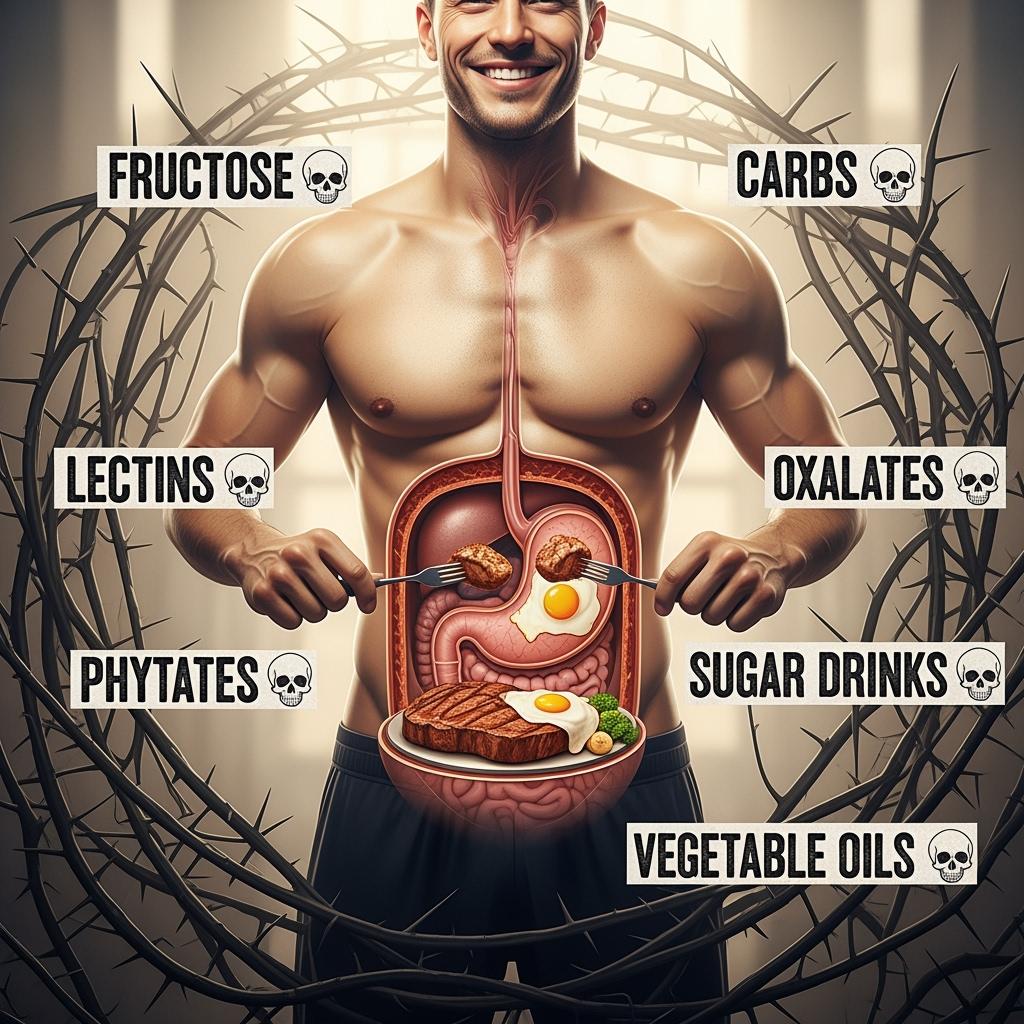
The connection between diet and autism has moved from fringe theory to mainstream research. Studies at Johns Hopkins University show children with autism have significantly higher rates of gastrointestinal inflammation and disrupted gut microbiomes compared to neurotypical children. This gut-brain connection is crucial. When carbohydrates and plant toxins cause intestinal permeability (leaky gut), inflammatory compounds enter the bloodstream and cross the blood-brain barrier, triggering microglial activation—essentially brain inflammation—which impairs neuronal communication and sensory processing.
A 2024 clinical trial with 146 autistic children found those placed on a modified carnivore diet (meat, eggs, and select low-toxicity fats) for six months showed a 67% reduction in gastrointestinal symptoms, 58% improvement in social communication, and 41% reduction in repetitive behaviors, along with significant improvements in sleep and anxiety. Researchers hypothesized that removing plant anti-nutrients and inflammatory carbohydrates reduced neuroinflammation, allowing the brain’s natural neural pruning and myelination processes to function properly.
In the early 1990s, autism prevalence was estimated at 4-10 cases per 10,000 children. By the 2000s, this had jumped to 20-116 per 10,000. Recent CDC data (2023) reports about 1 in 31 children (approximately 3.2%, or 323 per 10,000) in the U.S. are identified with autism spectrum disorder (ASD).
Is it time to look beyond labels to check what these conditions have in common?
To fully understand these conditions, we must remember what we explored in “The Fat Brain Story”—the human brain is approximately 60% fat. It’s literally built from the stuff! As we noted there, “It’s beautifully symbiotic—fat fuels brainpower, which drives problem-solving, which makes us hungry for more fuel, which our specialized stomach converts into nutrients, which our gut wall eagerly absorbs and dispatches to trillions of cellular power plants. This relationship isn’t just some dusty evolutionary tale—it’s living biochemistry happening in your head right now!” Without the proper building materials and fuel, how can we expect our children’s brains to develop and function optimally?
What if ADHD and autism aren’t separate disorders, but different manifestations of the same fundamental problem—brains constructed and fuelled with improper materials? The evidence points increasingly in this direction.
Both conditions show:
Inflammatory markers in the brain
Disrupted gut microbiomes
Abnormal fatty acid profiles in cell membranes
Mitochondrial dysfunction
Improved symptoms on ketogenic or carnivore diets
The early years may be challenging, but for many children, these neurological battles are just a prelude to an even greater crisis during adolescence—when the brain undergoes its second major developmental surge. How modern diets are devastating teenage mental health is our next story.
Please consider sharing it with your parents and teachers. Start researching ancestral nutrition yourself. Your mind—your future self—will thank you for it. Our ancestors’ nutrition choices literally built the human brain bite by bite, meal by meal. Recent research confirms that our brains perform best when fuelled as evolution intended and nature’s rules prescribe. The question is, are we brave enough to challenge conventional wisdom and return to what our bodies have always known?






 Douglas Schorr
Leave a comment