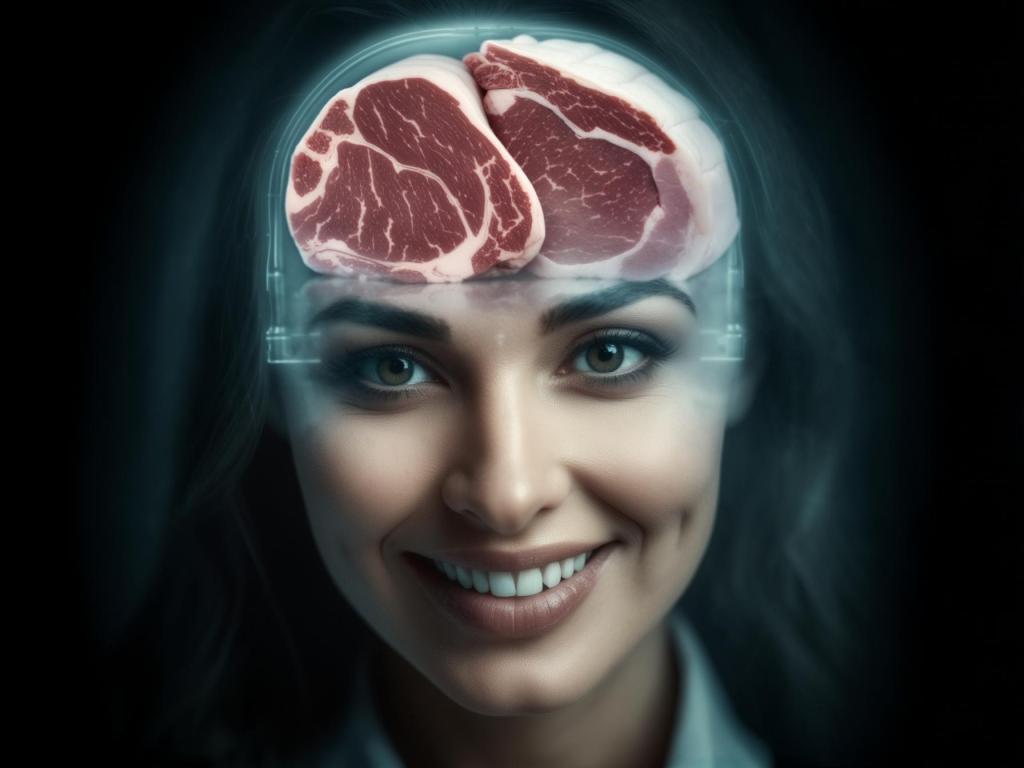
Your fork has more control over your “neurological diseases” than your psychologist. Your brain needs fat—super fat before medication.
It’s the brain-mind combination that sets creatures apart in nature’s grand hierarchy. As we explored in “The Carnivorous Predator-Herbivore Prey Brain Game,” predators evolved increasingly complex brains over millions of years, while prey animals developed single-track minds programmed primarily for one thing: detect danger and flee like hell!
Of all hunters, we hit the jackpot—becoming not just the smartest predators but the only animals (so far) to develop imagination. This magical ability lets us mentally test-drive scenarios before risking our necks in reality. The transformation took roughly 6 million years. The timeline is fuzzy because we can’t pinpoint exactly when our ancestors made that fateful, gutsy decision to abandon treetop safety for life on the dangerous ground below.
As Earth cooled and forests shrank, picture the absolute chaos! Most herbivores and omnivores hot-footed it toward warmer equatorial zones, with confused predators racing after their disappearing dinner. Our ancestral family, through luck or brilliance, chose Africa, and perhaps amid this mayhem thought, “You know what? We could make it down there. Might even be fun!” The leap made, there was no welcome wagon—just a harsh new world with brutal new demands.
Imagine their horror discovering how little food variety Africa offered compared to their former treetop buffet. Had they fled to Southeast Asia, they might have become orangutans, lounging in fruit-filled forests, a place where brains stay small when bellies stay full. For our lineage, there was no going back. In our new ground-dwelling adventure, we started at rock bottom of the food chain. Long before we learned to follow jackals to their kills, I bet we trailed behind ants hoping to discover their tiny feasts! We were the world’s first members of what Harari today calls the ‘Useless Class’—unemployable in the grand design of nature.
From the safety of the branches, our primate cousins probably howled with laughter at our struggles, but we were playing the long game. That bold decision to leave the trees revealed a spark of something special, something shared by few others besides those whales who chose to return to the sea. Our daily to-do list was brutal: find food, outsmart professional scavengers like jackals and hyenas, while avoiding being run over by rhinos and elephants, lunch for snakes, and most terrifying of all—lions.
Getting our hands on brain-building fat made all the difference. While our tree-dwelling relatives munched on low-calorie leaves and occasional fruit, we scavenged energy-packed fat offering more than double the power per gram compared to carbs or protein. This wasn’t just about filling our bellies—it was rocket fuel for our developing minds! Our constant problem-solving attempts triggered an unprecedented response from the Trinity. They began building something new atop our animal brain—a thinking mind capable of conscious decision-making. Though it would take millions of years to be useful, it was a start.”
It’s 2025, and here we are, bungling our health because we’ve convinced ourselves we’re too clever to follow our own biological operating manual.
Authorities argue endlessly about teaching kids complex social concepts, but nobody shows them something fundamental: “Hey kids, look at these pictures of Moo Cow’s four-chambered stomach, Eli Elephant’s massive gut, Vivan Vulture’s specialized acid factory, and Leonie Lion’s carnivore setup. See how each animal has custom digestive equipment perfectly matched to its natural diet?” Even in my school days, teachers wouldn’t dare explain that humans are simply animals with specific nutritional needs.
The human brain is approximately 60% fat—it’s literally built from the stuff! As our ancestors consumed more animal fat, their brains exploded in size and capability, triggering a cascade of cognitive breakthroughs.
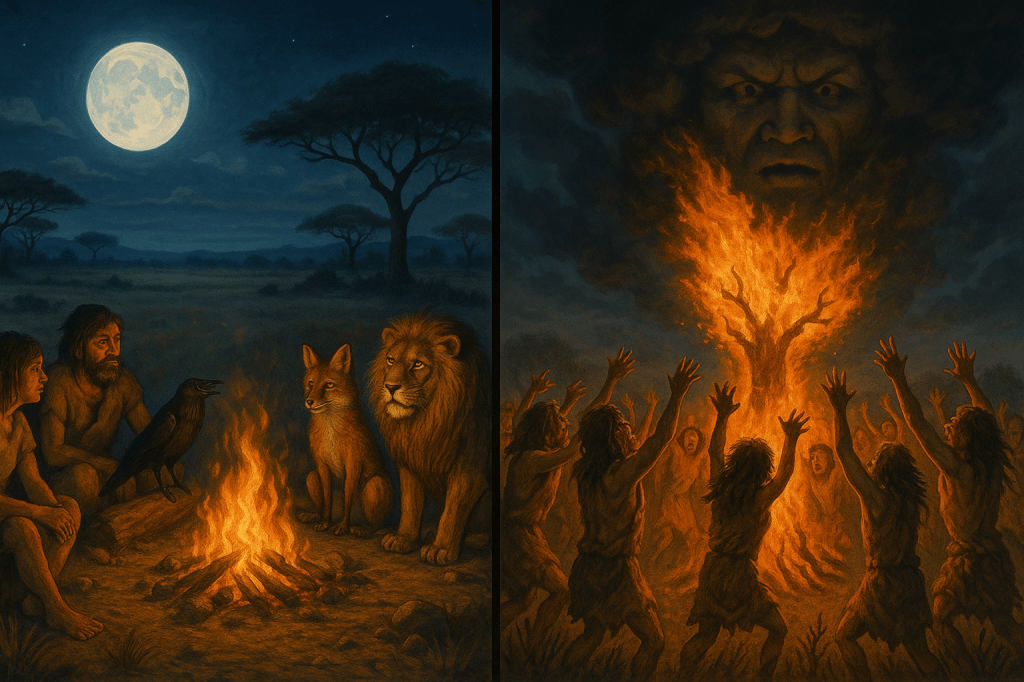
We hit evolutionary gold when we figured out how to crack open bones. Marrow is nature’s brain-building superfood—densely packed with omega-3 fatty acids essential for neural development. Then came the game-changing discovery of cooking with fire—the world’s first BBQ revolution! Maybe we used primitive utensils or simply discovered a lightning-roasted aardvark in its burrow after a storm. However it happened, our expanding brains weren’t just lucky accidents—they were literally built bite by bite, meal by meal.
Of course, fat and protein don’t directly feed the brain—they’re converted to ketones, the brain’s premium fuel. This transformation begins in our stomach. What we toss into this energy-producing miracle factory determines what our greedy brain receives. Though it’s just 2% of our body weight, our brain demands a whopping 20% of all energy produced. In tough times, that percentage increases. Even when we’re starving, the brain maintains priority over other vital organs—it’s the last light to go out, for it is the general in charge, not just of our conscious decisions but of literally every function in our body. Most processes run on autopilot, but even the tiniest adjustment gets processed by headquarters.
It’s beautifully symbiotic—fat fuels brainpower, which drives problem-solving, which makes us hungry for more fuel, which our specialized stomach converts into nutrients, which our gut wall eagerly absorbs and dispatches to trillions of cellular power plants.
This relationship isn’t just some dusty evolutionary tale—it’s living biochemistry happening in your head right now! When we eat animal fats, our bodies produce ketones that breeze across the blood-brain barrier with remarkable efficiency. Unlike glucose, which needs insulin (with all its wild fluctuations), ketones deliver steady, abundant energy without the crashes.
Our brains evolved to thrive on animal-based nutrition. Without those long-chain omega-3 fatty acids found primarily in animal foods (especially DHA), brain signals become sluggish and inefficient—like trying to stream 8K video through frayed copper.
Incredible, right? But here’s the kicker—eat the wrong stuff, and your brain goes haywire.
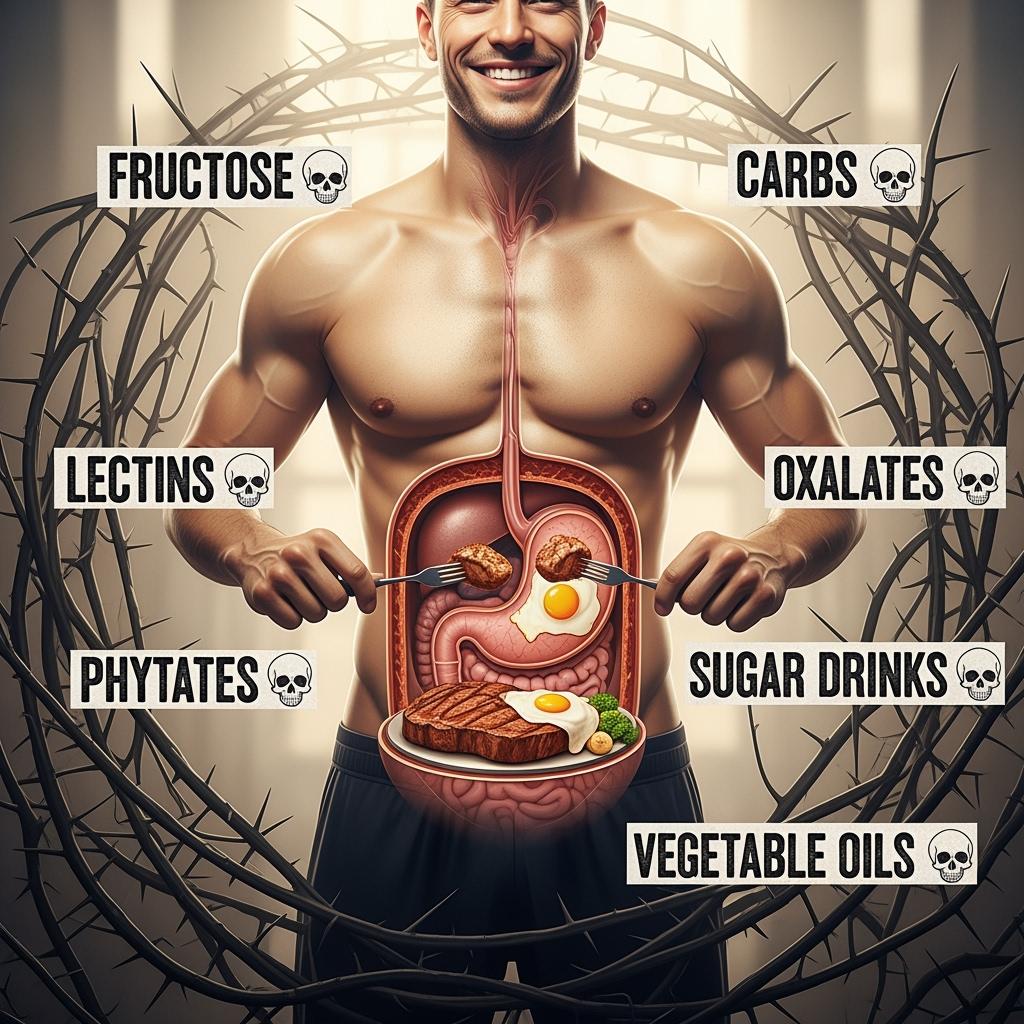
Vegetables do contain proteins and nutrients, but our single-chamber, highly acidic stomachs simply aren’t designed to extract them efficiently. Carbs, fruits, nuts, and vegetables are perfect for hindgut fermenters and ruminants—but not for us. Plants are downright hostile about being eaten, making most plant species toxic to most animals. Remember, we’re animals too! This is especially true for carnivores, and by design, we’re 95% carnivore.
When we try to run our precision-engineered brains on the wrong fuel, the results aren’t just subpar—they’re devastating.
This sets the stage for the neurological crisis we’re witnessing across all age groups—from developmental disorders present at birth to the explosion of mental health issues in teens to accelerating cognitive decline in adults. How it affects you personally depends on which genes have been epigenetically activated by the modern poisons you’ve consumed, interfering with what should be an operating system shared by all 8 billion human animals.




 Douglas Schorr
Leave a comment