
I’m stronger at 75 than I was at 40 because I finally understood the truth: obesity is manufactured, not inherited.
Two years ago I was a machine–albeit an old one. Pow! Eight months of circulating between injuries and forced rest cast the shadow of an elder’s decline. But I didn’t crumble. I’m still agile, powerful, and steady, with the same pinch of fat at my waist. The secret? I’m 98% carnivore–meat, eggs, butter, some yogurt and cream.
Rewind to 1970, Rhodesian National Service. When we finished “basic,” we were beasts. Then I slipped: as an officer on active service at the border, I ballooned to 120 kg! I planned more than I patrolled — less action, and as I wandered the base camp, bored, I got addicted to tinned condensed milk. My sergeant, who shared HQ duties with me and the radio operator (who did no patrolling), stayed trim. Back at my civilian job, I added another ten. I was so round I needed arm stretches to wipe my ass. My agricultural officer buddy, often out in the field, didn’t follow my breakfast, tea, lunch, tea, and dinner routine. He remained as athletic as before.
I’d participated in the latest round of the greatest nutritional experiment in human history. Left to behave more like our ancestors by eating what they needed when hungry, my men, the sergeant and all, were the control group. I was my own jailer for 40 years.
Three years ago, I hit reset, went carnivore. Weight dropped, settling at 97kg, then ranged between 102 and 104 kg when I added muscle-building training.
Sugar’s grip disappeared — I simply lost interest.
Most of us struggle. Nearly 42% of Americans are now not just overweight but medically obese. Malaysia’s childhood obesity rates have tripled since 2000. Worldwide statistics for women over 30 are horrifying–particularly in my South African homeland. For some groups, obesity rates exceed 70%. The infamous Walmart pictures reflect normal.
A metabolic catastrophe is robbing generations of health, impairing progress for all. My preteen neighbour, armed with health bars and energy drinks, is of a generation taught to normalize what should terrify: childhood obesity, diabetes, and ADHD. Do I remember overweight school buddies from the 1960s? Andy loved donuts and Coke, ha-ha. Not funny is that even deep in Africa this “stuff” was available, cheap, and, unlike cigarettes, alcohol, or drugs, no parent’s note was required.
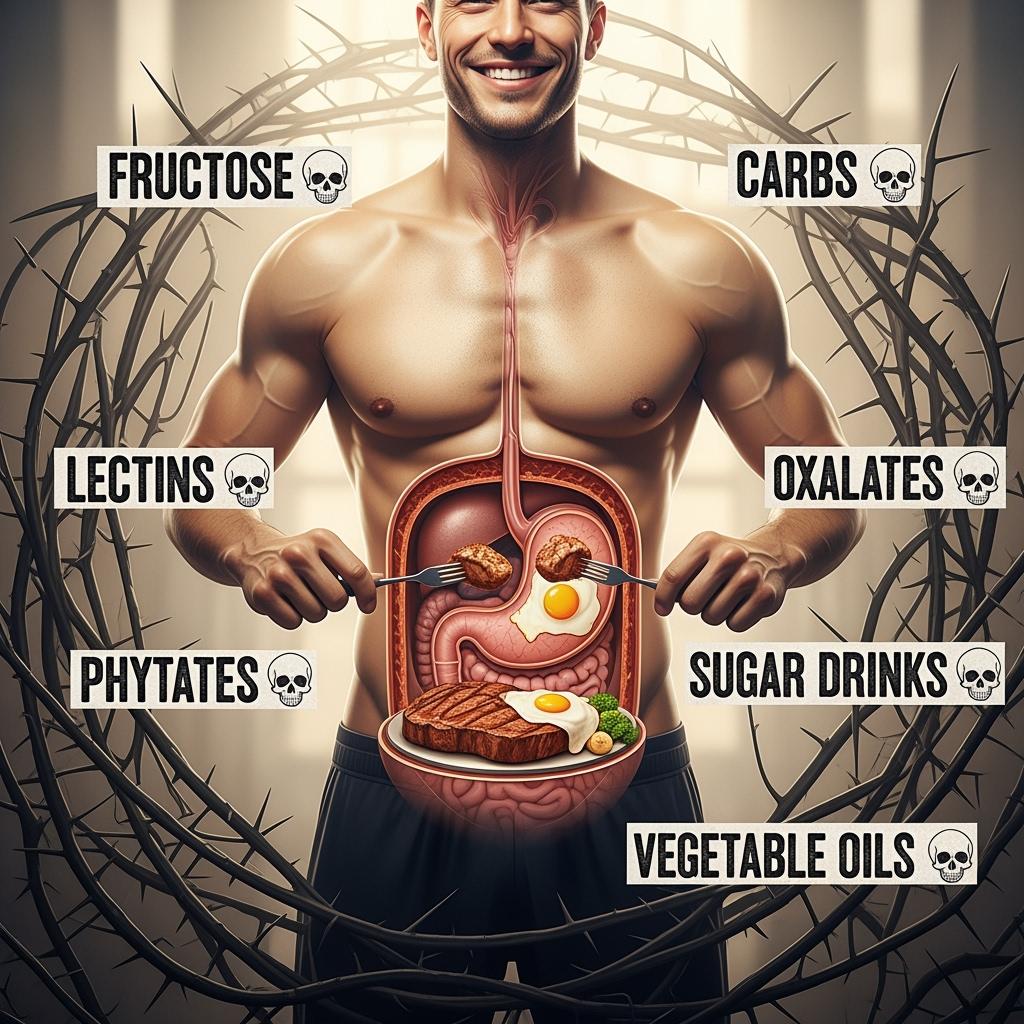
Obesity doesn’t happen without sugar. Don’t think only of the white stuff–bread, pasta, potatoes, fruit and nuts turn into sugar in your gut. Our single-chamber stomachs can’t handle the floods. We began eating meat as learner-humans in Africa millions of years ago. Sugary foods were a rarity–marula or sour plums a few days a year. Our digestive heritage is like a wolf’s, far removed from our plant-eating primate cousins. Their specialized gut fermentation chambers allow them to break down plants while we convert carbs and plant sugars to glucose rapidly. Blood sugar spikes, insulin surges, and fat piles on. It’s not about calories–it’s about hormones.
Sugar flips switches.
Particularly insidious is the addictive nature of these foods. Studies demonstrate that refined carbohydrates trigger dopamine pathways like those activated by cocaine and heroin. The food industry has weaponized this knowledge, engineering products with precise ratios of sugar, salt, and fat to override our natural satiety signals, encouraging us to ignore biological reality.
Some genes–like FTO–make weight gain easier, but they’re not the boss. Genetics are the sidekick, not the star. Track the history of groups within nations who tend to gain weight, and you’ll see “it’s my genes” has no standing. Individuals from traditionally overweight populations who ditch carbs stay lean–same gene pool, different choices, new diet. If genetics ruled, these shifts wouldn’t happen so fast.
After billions of years of evolution, our genes haven’t changed in the mere 50 years since obesity rates began climbing. What has changed is how our environment–particularly our food–interacts with those genes. Each generation consuming the modern processed diet experiences altered gene expression that can be passed to offspring. Yes, it is about epigenetics.
Your genes are a playlist; diet picks the tracks. High-carb eating cranks up fat storage and inflammation; meat turns it down. And those choices echo. Your sugar habit could wire your grandkids for obesity.
Studies from the Karolinska Institute have demonstrated that grandchildren of individuals who experienced periods of feast or famine showed corresponding changes in metabolic gene expression. When three generations consume similar processed diets, the youngest generation begins life with epigenetic markers already primed for metabolic dysfunction.
The good news? Unlike genetic destiny, epigenetic changes are malleable. It is reversible. Flip the switch.
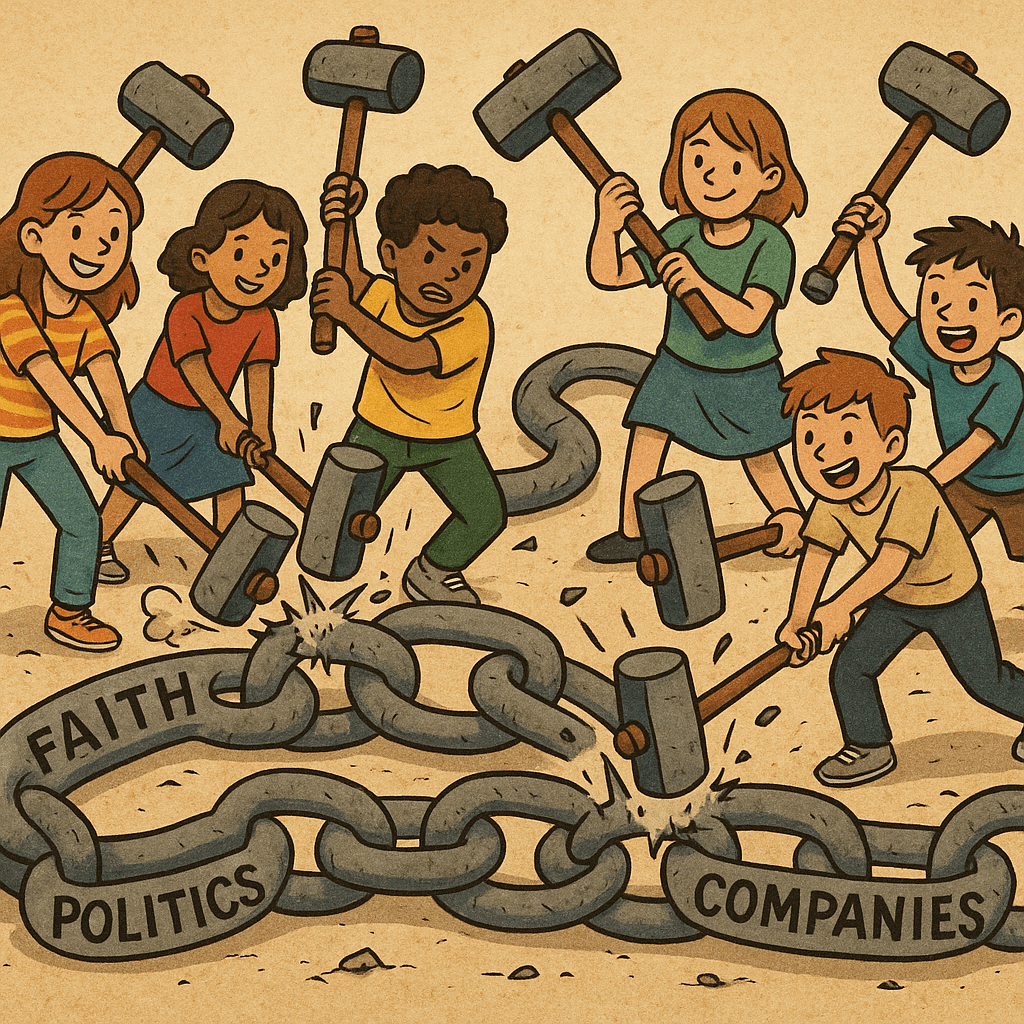
Don’t be ashamed. The system betrayed you, creating a metabolic mismatch that forms the perfect profit ecosystem.
The real villains? The “Big 5 Profit Maximisers”–religion, government (politicians and the lobbies), food industry, pharma, and medicine. For decades, they’ve peddled the Standard American Diet (SAD): sugar (fruit, carbs, and seed oils) and a sprinkle of meat.
Sugar hooks you cheap; pharma sells the fixes; hospitals and their numerous allies bank on the wreckage: Americans spend over $237 billion annually on diabetes care alone. This isn’t market failure–it’s market success at the expense of human health.
But cracks are showing. Old research–buried by sugar tycoons–is resurfacing. Science now screams, “meat and fat are not the enemy.” The SAD’s days are numbered if you care to take back control.
I’ve lived it. You can’t get fat without sugar. I found it takes a meat meal between 14 to 17 hours to digest, for me to get I-must-cook hungry. Carbs vanish fast, leaving you a starving, hooked fat-cell making machine. That’s biology; the willpower is yours. The good news: it is easier than you think. On a meat-based diet you work with your biology rather than against it. True satiety signals return. Your body clearly communicates when you’ve had enough because protein and fat trigger hormonal pathways that sugars don’t.
Society shames the obese, but it’s not all on you. We’re caught in a profit-driven trap. For young people reading this–especially those watching parents or grandparents suffer from “diseases of aging” in their 40s and 50s–understand that these conditions aren’t inevitable. The World Obesity Federation reported over one billion people classified as obese in 2022. Needless suffering. If a 1% rise in unemployment causes a 5% increase in psychological counselling cases, what’s happening here? Each percentage point represents millions of children who won’t reach their potential, parents who won’t see their grandchildren grow up, and countless lives diminished by preventable illness.
No matter how bad things seem, you’ve still got the power to change—starting with your very next meal.





 Douglas Schorr
Leave a comment