A prisoner-of-war camp’s black market entrepreneur spotlights Africa’s failure. The uncomfortable truths about progress delayed 75 years.
Singapore, 1942. The Japanese walked into the British Empire’s “impregnable fortress.” While bayonets awaited the Malay Chinese, European POWs found themselves in Changi—a prison without walls. No need for barbed wire when surrounded by jungle and sea with nowhere to run.
This strange captivity spawned the 1965 film *King Rat*—a black and white tale where one character splashes color across the screen: Corporal King, American entrepreneur.
While his fellow prisoners embraced a communist collective of equal misery, King carried on as if wheeling and dealing at home during tough times. Where they saw ruin, this practical corporal saw the American hut as a family business. His model? Simple capitalism.
King’s operation hummed: core staff received regular salaries while project workers earned their keep. Even a British colonel was on his payroll—military hierarchy inverted by economic reality. The film shocked in its depiction of King’s intellectual seniors—sergeants to colonels—nominally retaining military structures yet abysmally failing to be mutually productive. Indeed, barring their military police, everyone pretended they knew nothing of King. Fighting over trivialities, they’d mutter “cheat” while forgetting they’d dealt with him when it suited. They’d forgotten the essential truth of commerce: each transaction needs profit for all parties. Japanese guards risked execution for smuggling. King risked everything running his network. His team needed their cut. The man selling his wedding ring was making his choice in a terrible market—but a market nonetheless.
King’s masterstroke came when he chanced upon a smart British captain fluent in the local dialect. A Mr. Nice Guy who busied himself altruistically “pulling thorns” for many but without helping anyone with anything of consequence. Gradually, King reminded him of the principles of “What’s in it for me?” Halting, one-sided negotiations flowered into fairer deals, but there was more: he helped King gain greater acceptability and, with it, deeper insight.
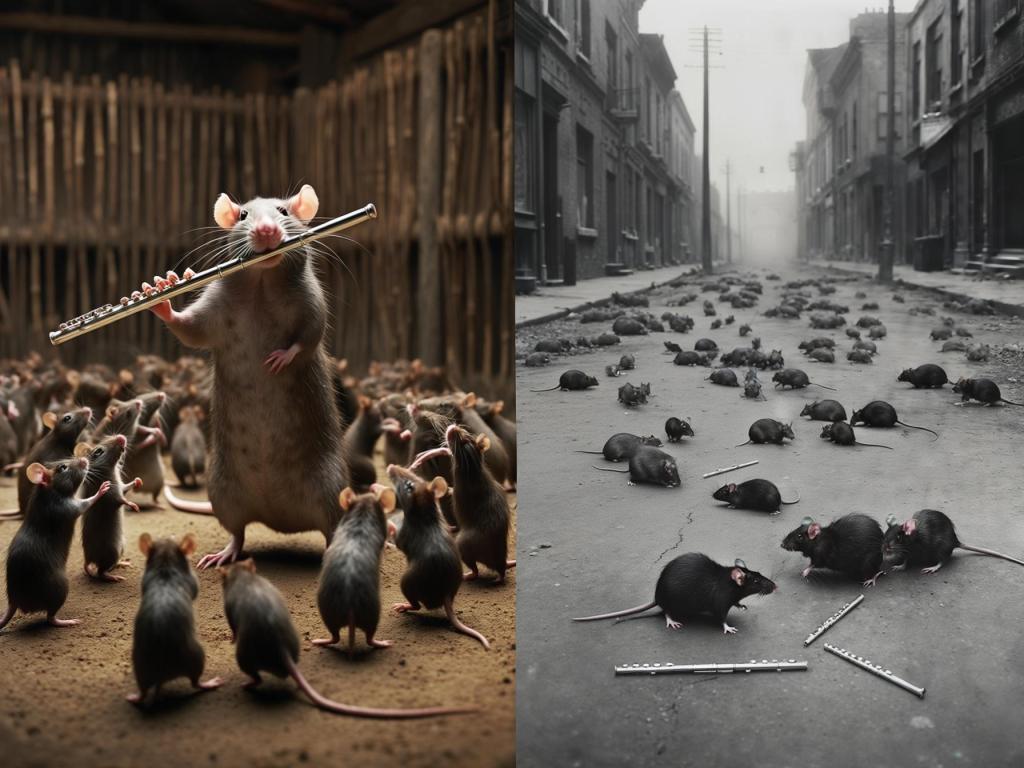
Their crowning moment came when, at a talk, they realized what not even the science teacher masquerading as a major grasped: rats farmed weren’t disease carriers but quality food. Soon, famished officers were rebuilding strength dining on “rabbit” that left King’s hutches as silky rats. Everyone won. The rich grew richer, certainly, but the poor lived again.
Fast-forward to contemporary Africa: 80% of black citizens exist in conditions eerily reminiscent of Changi—hemmed in by invisible barriers erected by their own politicians, layered atop restrictive tribal hierarchies. Black nationalists readily adopted the ideologies provided by the woke—today’s upgrade of the ultra-liberals, akin to King Rat’s captain before his conversion, arguing that because of past “inequities,” reparation was in order. The welfare fence is particularly effective: governments give just enough to survive, never enough to escape. The full impact of this horror needs a book, but a magnifying glass on Zimbabwe illustrates the Changi-Africa link.
After crushing the rebellion in the late 1890s, European settlers set aside “Tribal Trust Lands” where chiefs ruled under Native Commissioners’ oversight. The NCs discovered that transitioning from a hunter-raid-your-neighbour society to a looser collective of families nominally under tribal authority, charged with developing a resource and trade economy, meant asking people the impossible—to leap centuries overnight.
Even with thousands of years of training, the Changi seniors devolved into an unimaginative, useless bunch. How could sub-Saharan Africans be expected to build what they had never experienced? Especially as the 1% who could “see” had “escaped” the TTLs to further themselves in jobs in the fast-growing First World sector of emerging Rhodesia.
Beginning around 1910, money and effort poured in, directed by the NCs. Roads, dams, schools, clinics, and cattle dips were established only to deteriorate faster than repairs could keep pace, with chiefs simply extending hands for more. Nothing malicious—they simply couldn’t maintain these unprecedented “firsts” now dominating their lifestyle. Kings always provided, and he never allowed King Rats. Now the Commissioner was king-please give.
The watershed came with returning WWII veterans, many of whom were farmers, police, and Native Affairs members. I’ve no idea who first pointed to whom, but a “lightbulb lit” around the tremendous advances made by the many missionary stations patiently exposing their local blacks to modern economy skills.
Government policy flipped: communities had to initiate requests rather than passively receive. It didn’t work: the early 1950s stagnated. Another lightbulb moment—it was not stubbornness. The majority simply couldn’t see.
Enter Africa’s King Rat guides, let-me-hold-your-hand teachers.
NCs recruited, and at a national center augmented by provincial schools, trained Community Development Agents. They were not bureaucrats but men and women of known successful families, catalysts who moved through villages planting seeds of possibility. When these sprouted into community-owned ideas, agents helped shape viable proposals. Government expertise and cash support still flowed, but execution and learning exposure, and the results, were owned by the people.
I joined Internal Affairs as a trainee officer in 1967. Communities were flourishing—relative to their starting points. I grew up in a lower middle-class white African family. My parents were King Rats in finding work and stretching earnings. For TTL residents, “flourishing” meant daily water access, commodity stores, healthy cattle, schooling children, roads with buses, and a clinic somewhere nearby. Township Africans fared infinitely better but still relied on employers as their King Rats. Progress came through regular income, productivity bonuses, and promotion.
Rhodesia’s Grand Canyon was a lack of Changi-educated captains. The shortage guaranteed the rise of Robert Mugabe.
The Wokes’ academic, an orator and theoretician, Mugabe was totally divorced from practical solutions. Winning the 1980 election, he soon began performing as the British colonel in charge of food rations (life) disbursement in Changi—robbing “here” to support preferred “there.” Mugabe declared Community Development a colonial instrument and implemented affirmative action policies that destroyed businesses, eliminating workplace learning experiences far superior to university education.
The nuance is seldom understood: forcing someone to lift an intellectual 200kg when clearly impossible destroys them. Rapidly promoting someone who needs time to develop to that capacity and falsely declaring they are lifting 200 kgs is worse: it destroys them, their colleagues, and whoever they are meant to serve. This pattern shows in Malaya’s fall, Zimbabwe’s collapse, and SA’s determined BEE march to the abyss.
The way forward lies in SANNA—my proposed New National Army. National service with a difference: organized according to business principles, the “can do” folk would teach community building and skills development and bring back home discipline. The challenge remains finding politicians who understand Western-style democracy in itself kills human flourishing.






 Douglas Schorr
Leave a comment