
The Luxury of the Poor: How Surplus Changed Humanity
It’s the 1950s, in Bulawayo, now Zimbabwe’s second city. In the shade of the ancient marula tree, a cooling breeze drifting by, I’m at the feet of my aged mentors: Uncle Charles, a veteran of Cecil Rhodes’ pioneer column, and Muhle, son of one of Lobengula’s generals. Both men helped found the city in 1895.
We’re comfortable talking of this and that until the conversation turned to the news that the Shona politician, Rev. Ndabaningi Sithole, had said whites had made blacks poor. They switched to rapid-fire Matabele, voices heating up. They’ve become a funny old couple, but I learned that all it takes to refocus them is to whine, “What did he say?”
“I said I’d sent blankets to Jairos Jiri and-” begins Uncle Charles.
“And I said he was crazy,” growls Muhle.
What? Jairos Jiri is the new charity downtown supporting cripples and those who can’t look after themselves. How could Muhle disapprove?
“My father…” begins Muhle.
His father was a young officer in Mzilikazi’s army. Mzilikazi was the disgruntled Shaka Zulu general who broke from the great king and founded the first Matabele Royal Kraal—Bulawayo. The Zulu, both men and women, were tall, powerful, and fit—the men handsome, the women beautiful. Any blemishes on their skin were more likely the result of wounds from hunting animals or battling neighboring tribes.
“Hmm,” interjected Uncle Charles, “not just the Zulu but with the odd exception, all Bantu. I guess 30% of the Matabele were slaves-becoming-citizens, and I needed to know their family names to tell them apart. Whether Matabele in Bulawayo, Mashona in Salisbury, and Manica in Umtali, all were tall, dark beauties—.”
“Because,” snapped Muhle, “only the best survived. You see, son…”
*
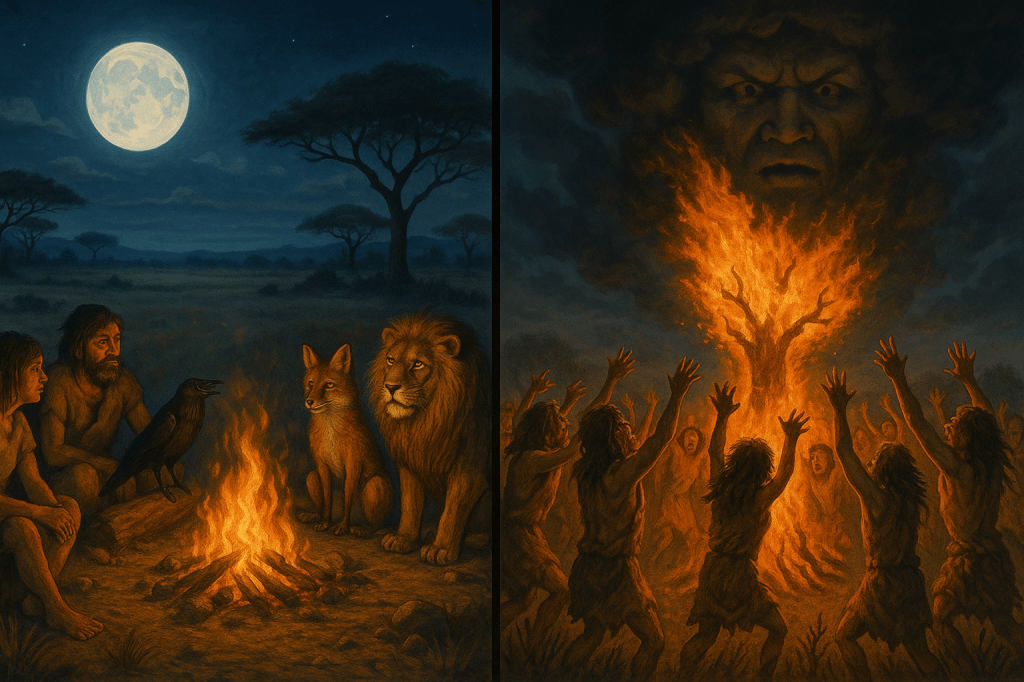
The Bantu had traveled a centuries-long journey from the tropics to Southern Africa, living as they had for millennia—close to nature’s edge. In this unforgiving environment, with survival dependent on every resource gathered, they couldn’t afford imperfection in their people. Customs—laws handed down by the gods—helped ensure tribal survival. Midwives inspected newborns, and any significant deformity meant the child wouldn’t survive—not from cruelty, but necessity. The tribe’s resources were too limited to support those who couldn’t contribute. What one ate, one had to have earned. The engine of ancient African development—a survival economy— was rough.
From our earliest human origins, every day meant improving through cooperation. Loyalty to the chief strengthened relationships, benefiting all. And as a personal commitment to excellence was essential, no poor existed; physical or mental limitations simply couldn’t be sustained.
The Zulu distinguished themselves by focusing on becoming the region’s dominant force, controlling lands rich with game while building their population. Unlike other African groups whose numbers continued to grow glacially over centuries, the Zulu accelerated their growth from the 1700s. Security wasn’t a concern; numbers were. Young women captives became instant mothers, boys warriors. This laid the foundation for the Zulu to outpace even the Xhosa by 2 million.
*
All humans followed this pattern. What was unique to Africa was that these selective pressures had applied in Eurasia 10,000 to 12,000 years earlier. Back then, in Eurasia, there were no weak, deformed, or disabled—physically and mentally—survival didn’t permit such luxuries.
It takes time for young readers, especially the dissolute woke who live in excess, to understand that there are no “poor” among living things—neither in plants nor animals. Life snuffs out the weak; they exist now only because humans became hugely successful.
The poor only exist because there were enough successful “others” to support them, and they’ll only continue to survive if enough others remain.
The luxury of affording poor people was the next step up on Humanity’s ladder. First came the ability to distinguish between “Us and Them” and to fervently agree to give our lives for “Us.” Then we learned to take captives rather than kill enemies outright—slavery became the humane alternative to extermination. This transformation of sparing the poor in body or mind began happening in Eurasia with the invention of agriculture.
As Eurasians developed crops and domesticated animals, they settled. Within a few thousand years, they were producing a surplus. This surplus induced whispers of what we now call “care”-the ability to support those who weren’t perfect specimens and unlikely to contribute fully. Gradually into Eurasian culture was a willingness to support the imperfect, the disabled, and the mentally vulnerable—not abandoning them to death’s mercy.
Sub-Saharan Africa never got to this step. It was plunged straight from settled hunter-gatherer into colonialism. It had been Eurasia’s next giant step up the humanity ladder, but with roots 4000 years earlier. Despite the Woke’s lament that colonialism was exploitative (their only valid point), in Africa it represented movement beyond direct enslavement into acceptance and the willing transfer of skills. What surplus had done, colonialism sent into orbit.
“Africans were unable to respond,” Muhle continues, “At first, I couldn’t believe my father’s stories that this motley crew of fit, fat, and cripples, who came pleading for King Lobengula’s permission to prospect and hunt, had thrashed the mighty Zulu army. I should have known better—they had horses, ox-drawn wagons, practical clothes, water containers, weapons that… oh my goodness, I remember Mr. Charles shooting a duiker for me that was so far away I could hardly see it.”
“Yip, Muhle,” nods Uncle Charles, “the Africans were in the survival-by-accretion phase. In Central and Southern Africa there was no surplus until whites started agriculture in the mid-1800s, with real improvement only after 1900.”
“Improvement?” Muhle raises an eyebrow. “Fifty years on and we have a Jairos Jiri depot and orphanage! We are wedged between a rock and a hard place. Neither the dogma-bound church or the affluent West understands the dread that throttles millions of African homes when a child is born, a child that could have been avoided with a little family planning support.”
“You see, boy, the imposition of the poor upon the Bantu is the doing of the colonists. We were expected to make the impossible leap from settled hunter-gatherers to participating in a modern economy.”
“Yes, but so many now live—” Uncle Charles begins.
“On welfare,” Muhle interrupts, “because it isn’t just the traditional poor that arose out of this so-called step up the humanity ladder. Most of us Bantu haven’t been able to make that leap. The Eurasians took 10,000 years. We’ve got 200! Someone needs to build a bridge, and those who are building are being chased by our politicians. Can they build? No, of course they can’t. They can only string words together which end as rope around our necks, and then someone throws a match.”
“Baba Muhle,” I cried.
*
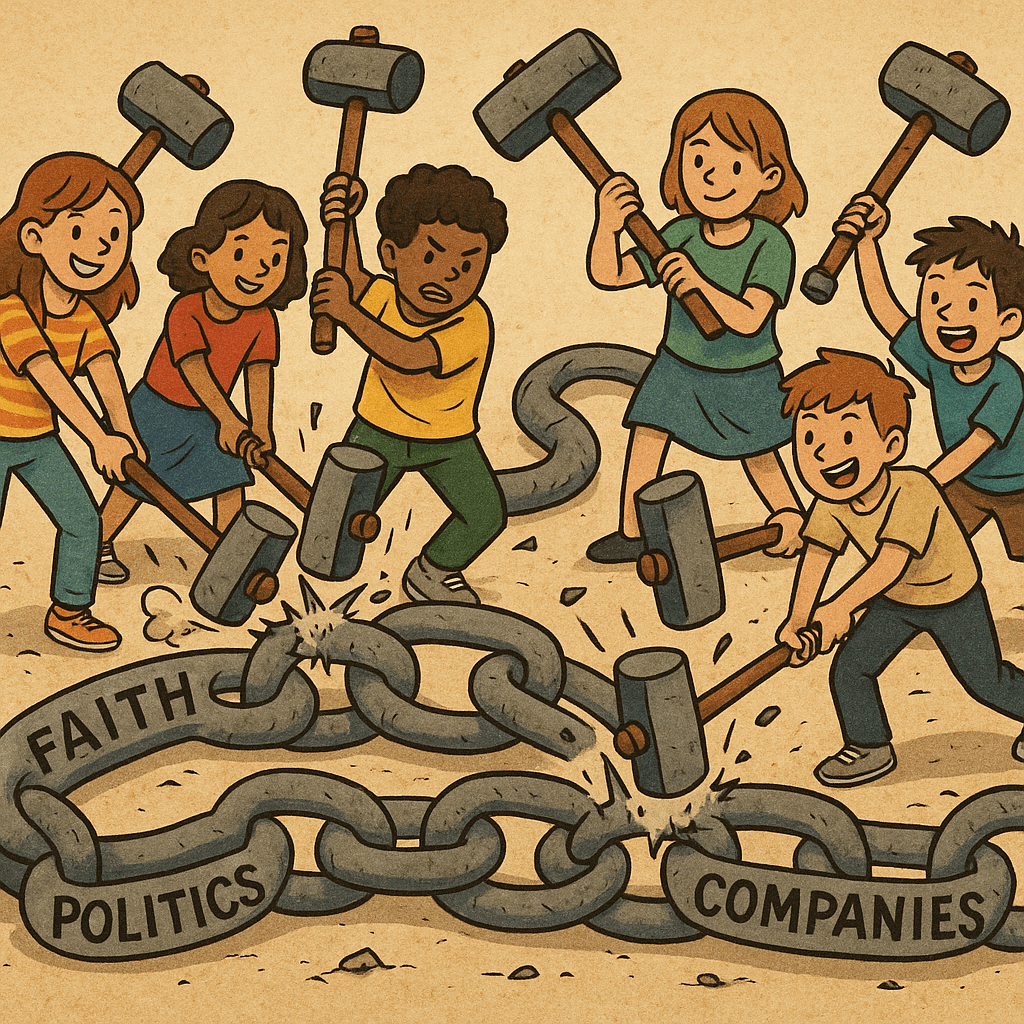
Muhle was right about the paradox now faced. The very successes that allowed society to support those who couldn’t survive created new vulnerabilities. In South Africa, as birds-of-a-feather ANC, MK, and EFF dismantle rather than build economic bridges, the capacity to support the genuinely vulnerable erodes.
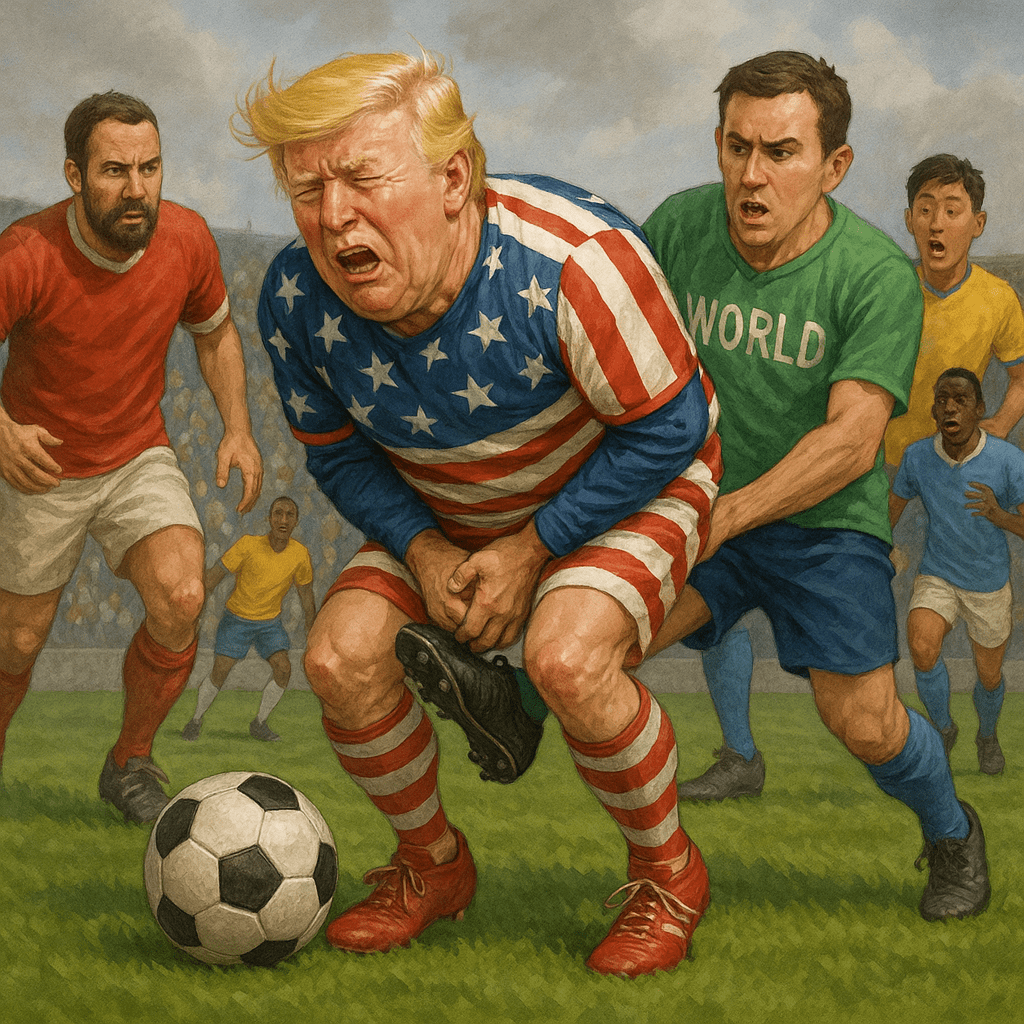
Before you mumble “shame,” be aware this pattern threatens all societies that have allowed their national identities to be attacked. As economic foundations crumble, can the West maintain the prosperity that made the poor possible? Compassion is unsustainable without continuing success. As economic deterioration threatens population sustainability, is the World Economic Forum’s call for population reduction necessary?
The lesson of our conversation under the marula tree still resonates: the ability to care for all isn’t an inevitable state of human society but the precious achievement of success that must be carefully maintained.




 Douglas Schorr
Leave a comment