
If you think Malema is a problem, your head is in the sand. Numbers don’t lie: South Africa’s crisis isn’t about race. A devastating brain drain leaves millions without economic leadership
A question many are asking: Why hasn’t Malema, the small, Northern Sotho Economic Freedom Front (EFF) leader, been arrested or charged for his public chants to “kill the Boer”?
A better question is, “Why does he persist?” – Airtime! Media outlets love him–he sells papers and stirs clicks.
The real problem is that millions of ordinary South Africans of all races who are busy undoing the ANC’s bungles while trying to keep the country’s crumbling engine running waste time and energy on him.
Picture this: You’re one of roughly 20,000 black South Africans with an IQ above 110. You’ve earned a mechanical engineering degree and slogged through an internship. Now, in Gauteng North, you’re launching a small business to manufacture and distribute cleaning products. As a solo founder, you need employees who can work unsupervised for stretches of the day–five people with an artisan or technician bent with, as your knowledge of job grading suggests, an IQ around 85-90. It should be easy, but here’s the catch — everyone wants these people. They are the bedrock of the mid- to upper-skilled practical workforce in factories, mines, engineering workshops, research laboratories, agricultural operations, tourism, healthcare facilities, and clerical and accounting departments. They are sought after and fought over, and because there are only potentially 5.5 million blacks who fit this profile, it poses a massive deterrent to exactly what Malema claims to stand for: economic freedom.
South Africa’s black population (85% of the country) averages an IQ of 70. This means only ~11% fall into the 85-95 range. But wait, subtract retirees, committed caregivers, and students, and suddenly you’re competing with every other employer (the government being the biggest) for the contents of a very shallow pool. By contrast, white South Africans (mean IQ 96) have ~25% in this range–but there are only 4.5 million to start with.
As odd as it seems, China offers only 19% in this range. But the difference is that the 85-95 range represents the lower tail of their distribution! Oh, what privilege that represents. But to return to South Africa, whose productive-people-numbers are so low, it can only “grow” by either embracing full robotics as China has anyway, taking on more unrepayable loans, seeking more undercounter (mostly US) aid, or publishing increasingly inflated GDP numbers facilitated by rising corruption, expanded welfare payments, and higher minimum wages.
Look, 5.5 million is a solid number–nearly a million more than all white South Africans. Add the 2.5 million blacks scoring above 95, and suddenly black South Africans match the combined European, Indian, and Asian populations. But the critical question remains: Is 8 million enough to run a country where 80% of citizens score below 85?
The ANC retorts, “Rhodesia thrived with a manager-to-worker ratio of close to 1:50!” True–but Rhodesia’s managers arrived with centuries of modern economic culture built in, whereas SA (overall – a tiny few of the Eastern Cape had over 300 years of internship) has less than 100 years, and that 8 million isn’t truly 8 million because half are women, and half of those women are bound by caregiving and studying, while over 30% of the men are boys attending collapsing schools. Add to this appalling situation the fact that SA leads sub-Saharan Africa in job-crippling diseases: HIV, TB, obesity, and explosive diabetes rates.
The U.S. Army’s verdict echoes grimly here: No one with an IQ below 83 can function in any role without close supervision. Apply that to South Africa, and the more generally accepted statement that “75% of South Africans need supervision to perform in a modern economy” is likely an underestimate. This is why uninvited migrants, whether Nigerians, Kenyans, or Zimbabweans, are in SA and doing well. Lack of opportunities at home led them to fill gaps in South Africa. It’s not because they’re particularly smarter–all Bantu peoples have similar IQ profiles–but because the local 8 million are too busy elsewhere in what used to be a very robust economy.
*
So, young entrepreneur, there lies your business problem. You are seriously constrained in choice. Millions seek work, hundreds of millions if all of Africa is included, and while theoretically there is a 15% chance that those who approach you will have IQs of 85 or more, they are already spoken for. This is one of the frantic reasons for cronyism in Africa. Paradoxically, satirically, there is hope.
As the economy slows and businesses leave or fade (after EFF harassment?), more of the people you need will become available. But it’s a double-edged sword. You will have to be super productive at a lower cost because, as this happens, fewer people will have money for cleaning materials. Look across the Limpopo. The black elite err in closing the shutters as the sun sets.
Since 1996, when the white population was 4.4 million, 650,000 whites (including holidaymakers, it’s likely closer to 800,000) with estimated IQs of 90 and above have left. That significant percentages of well-qualified black professionals also left will be the subject of a separate post. I can cite 90+ with reasonable confidence because they’ve emigrated legally, and the countries accepting them have stringent requirements. Sure, without them, by 2024, the white population had increased by 100,000 to 4.5 million.
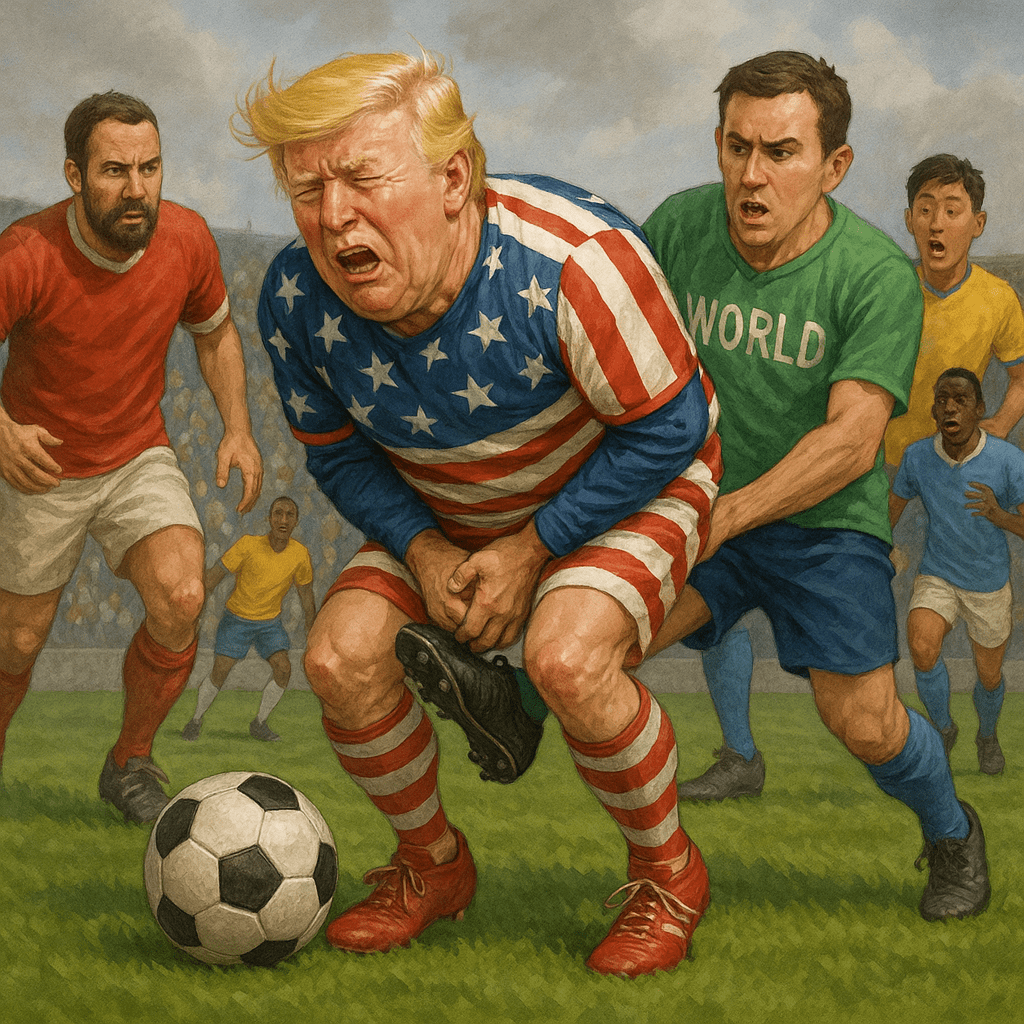
Here’s the kicker. It’s like the top football team taking 15% of the best players from the 2nd best team. Overall, the average IQ that whites now offer South Africa has decreased by a little over 1 point. Negligible? No: where there would have been roughly 1,750,000 helping stimulate jobs for people of lower skills, there are now only around 1,100,000.
*
Farm murders are brutal, but not a white genocide–South Africa’s violence is systemic. South Africa’s inequality isn’t driven by entrepreneurial success but by corruption, cronyism, and the political determination to create welfare dependency. Malawi, one of the world’s poorest nations, is proof that equality drives poverty. Countries that thrive are those with an abundance of movers and shakers—the outperformers. Inequality, not equality, kills poverty. SA’s terminal disease is having too little inequality of the right kind. South Africa needs meritocratic inequality–rewards for skill and effort–not racial grandstanding.
Malema’s rhetoric is a spark in a dry field–sort of dangerous, not yet a fire. Malema’s support has cratered by 40%. His inner circle is becoming a “group of one.” If donors stop bankrolling his rallies and media denies him oxygen, his spark dies. Play your part—boycott everything about him.
The true genocide is economic. As skills flee, the tax base shrinks and services collapse, but most of all, the masses are left without teachers, instructors, and guides.





 Douglas Schorr
Leave a comment