A toothbrush request refused exposes South Africa’s misplaced priorities.
A common theme of South Africa’s ruling ANC and its breakaways is that whites—7% of the population—are racist and should leave. Yet, despite their exodus, the black elite pushes harder, forming a special judiciary division for hate speech crimes, where blacks overwhelmingly seek the prosecution of whites. Meanwhile, gender-based violence and general crime spiral, and employers, stretched thin by economic decline, risk hate speech labels for losing their temper over costly mistakes.
On reflection I found it crazy-funny that a young black guy found it so crazy-funny that he was sharing a table with a me in a busy burger joint in Muizenberg, that he told me this story:
“So, this older Xhosa guy bussed into the city from Butterworth to see his son, a police captain. He arrived unannounced as his son braced for looting over a shampoo advert.
“Goodness, I will stay out of the way. I’ll just sit quietly in your police car.”
“Not this time, Dad. Please just stay in the Old Men’s Hostel for the night.”
“Will I be safe?” questioned the police captain’s dad.
“Ah, sure. There may be a few Zulu, some from the north, but mostly Xhosa like us, and anyway, it isn’t like the old days. Just keep the talk to a minimum and don’t make a thing about being from Butterworth. Speak English.”
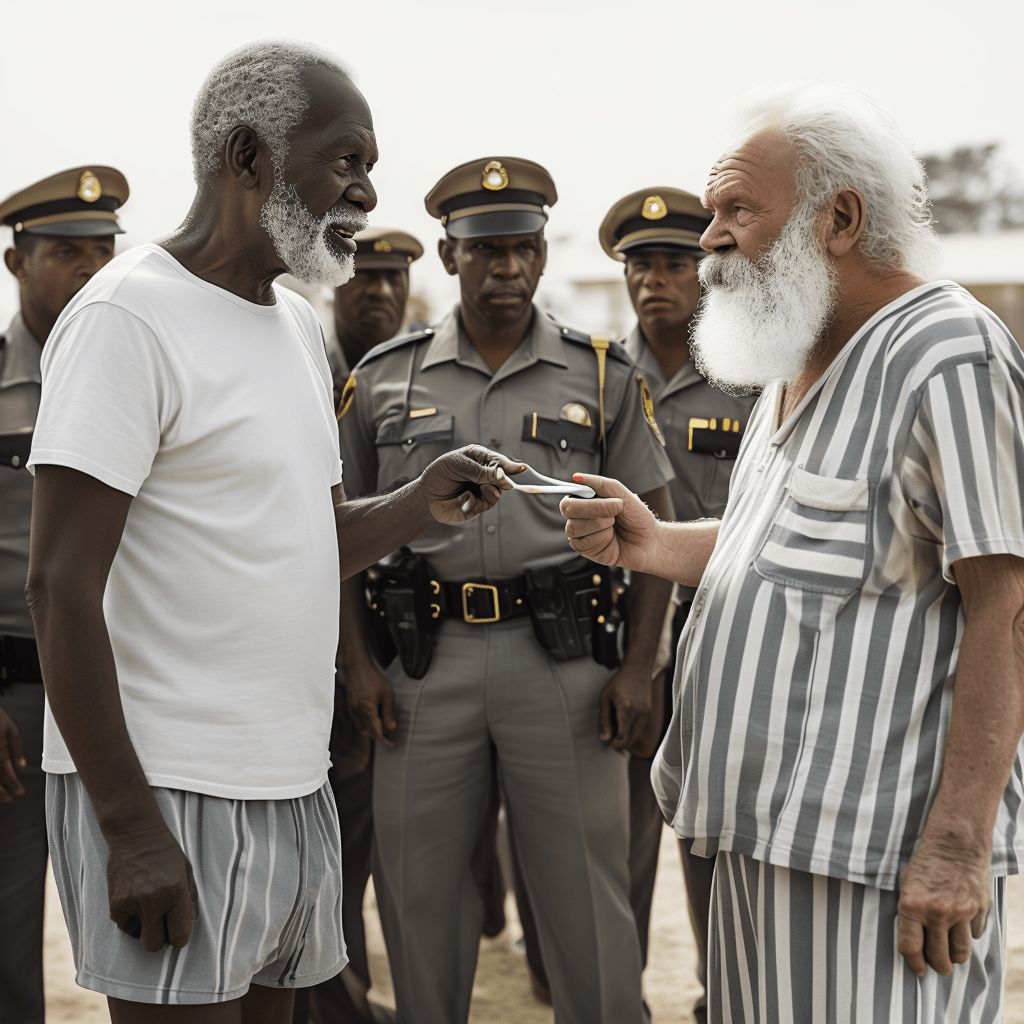
He booked in, listened carefully to the Zambian’s directions to get to his room, and agreed that he understood the ‘no girls, no outside food allowed’ rule. Thinking he had it to himself, he opened the door without knocking and was shocked to see a broad-shouldered, bearded white guy in stripped pyjamas, about to get into bed. ‘Oh my, I’m effed,’ he said to himself, and not knowing what to do, stood. ‘Even if they give me my R200 back, where’ll I go? It’s dangerous out there.’
“Ja, hello. Come in, man. Close the door before you invite the mossies in,” said the Beard.
He managed a smile, quickly thanked God that his Afrikaans was better than his English, popped his suitcase on the untouched bed, asking where the bathroom was, opened it to discover, to his horror, emptiness. He’d brought the wrong one of the leather-trim twin set. He turned to the Beard and asked, “Would you have a towel I could borrow?”
“Sure.” And he clambered out of bed, squatted down, pulled his suitcase from under his bed and handed the cop’s pop a towel.
“Err, look sorry. Some soap?”
“Sure.” He pulled the suitcase out again.
And off he padded, following Beard’s directions while repeating the shower-operation instructions. Back in the room he began to unwrap to hand back the towel, but… “Oh damn. You couldn’t see your way to borrowing me a pair of pyjamas?”
“Sure,” and Beard clambered out of bed, squatted, and pulled his suitcase from under his bed and handed the old boy a T-shirt and a pair of boxers, closed up, and pushed the suitcase back. Taking the towel, he hung it on the window latch to dry.
“Thank you,” beamed the cop’s pop, but as he pulled his blankets back, he ran his tongue over his teeth, and turning once more to Beard, he asked, “Could I lend your toothbrush?”
“No. Man, that’s one ask too many.”
Next morning, driving off, the captain asked, ‘So how?’ His father snarled, and pointing at the broad-shouldered Beard struggling with his bags, he said, “I was forced to share a room with a f-word racist.”
I asked the young man if he wasn’t trivializing things. “Perhaps a bit,” he said. “But while courts chase parliamentary fantasies, the country’s going to the dogs. We need to call out real issues—violence, poverty, the rapid decline in competitiveness—not politicize every word. Hate speech matters, but when it trumps rape or family breakdown, we’ve lost the plot. Anyway, isn’t that why we have lawyers?”
In 2022, South Africa saw over 27,000 murders and crime at industry-level happening in front of the police, yet hate speech cases—like toothbrush refusals—clog the system. Employers face ruin if, in a heated moment, criticism of performance gets racialized. Hate speech matters, but when prosecutors turn a blind eye when it comes from leading black politicians, you realise there is a different agenda in play.





 Douglas Schorr
Leave a comment