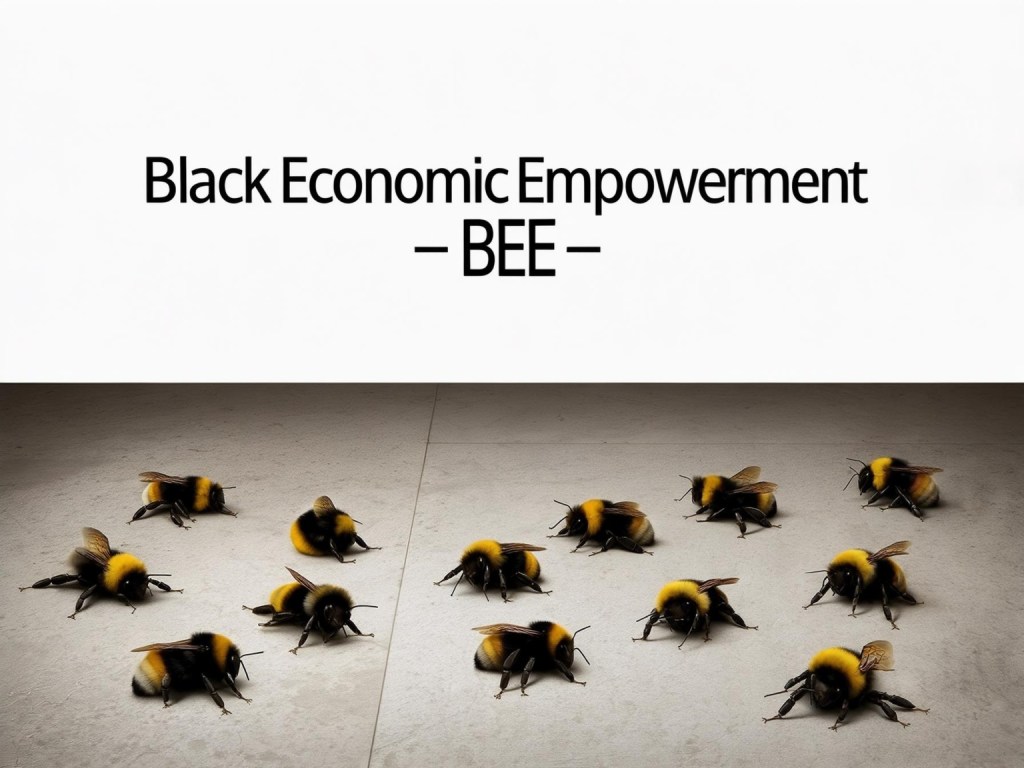
The Cost of Political Engineering
When the Mbeki government introduced Black Economic Empowerment (BEE) in post-apartheid South Africa, it promised rapid transformation of the economy. The policy looked elegant on cabinet office whiteboards, where complex business operations were reduced to simple boxes and human capital to stick figures. Reality proved far messier.
Similar experiments had already shown their dangers. In the US, heavy-handed affirmative action programs threatened Martin Luther King’s dream of merit-based equality. Zimbabwe’s adoption of Malaysia’s quota system led to economic collapse. Yet South Africa pressed forward, eventually shifting from “equal opportunity” to demanding “equal outcomes” – a change that replaced meritocracy with compliance and triggered a devastating brain drain.
Twenty years later, BEE remains entrenched for two simple reasons: it enriches a small circle of political cronies, and its rhetoric of “reversing apartheid’s inequalities” captures votes. South Africa, blessed with vast resources and skilled professionals, should be a global hub of mining, manufacturing, agriculture, finance, and tourism. Instead, its leadership seems determined to follow the old idiom of cutting off its nose to spite its face – willing to harm the average Black South African as long as it can claim to be punishing the ghosts of apartheid.
The Corner Shop Paradox
In South Africa’s townships, corner shops tell a different story about government policy. These stores charge higher prices, keep shorter hours, and often sell expired goods. But behind these symptoms lies a complex reality.
Where ambulances fear to tread, business costs soar. Security expenses mount. Insurance premiums skyrocket. Delivery services charge premium rates based on risk assessments. Even managing shoplifting becomes dangerous – catch the wrong thief with the right connections, and the shop owner pays the price.
The sale of expired goods, carefully labelled as such, serves as an economic thermometer. Like HIV rates indicate metabolic health, the demand for expired goods reveals economic desperation. These shops, often run by immigrants who understand the risks while lacking local affiliations, flash red warnings about community stability.
When violence erupts, politicians arrive for photo opportunities, missing the deeper message: these struggling shops demonstrate the urgent need for South African National Neighborhood Assistance (SANNA) – a program that remains conspicuously absent.






 Douglas Schorr
Leave a comment